
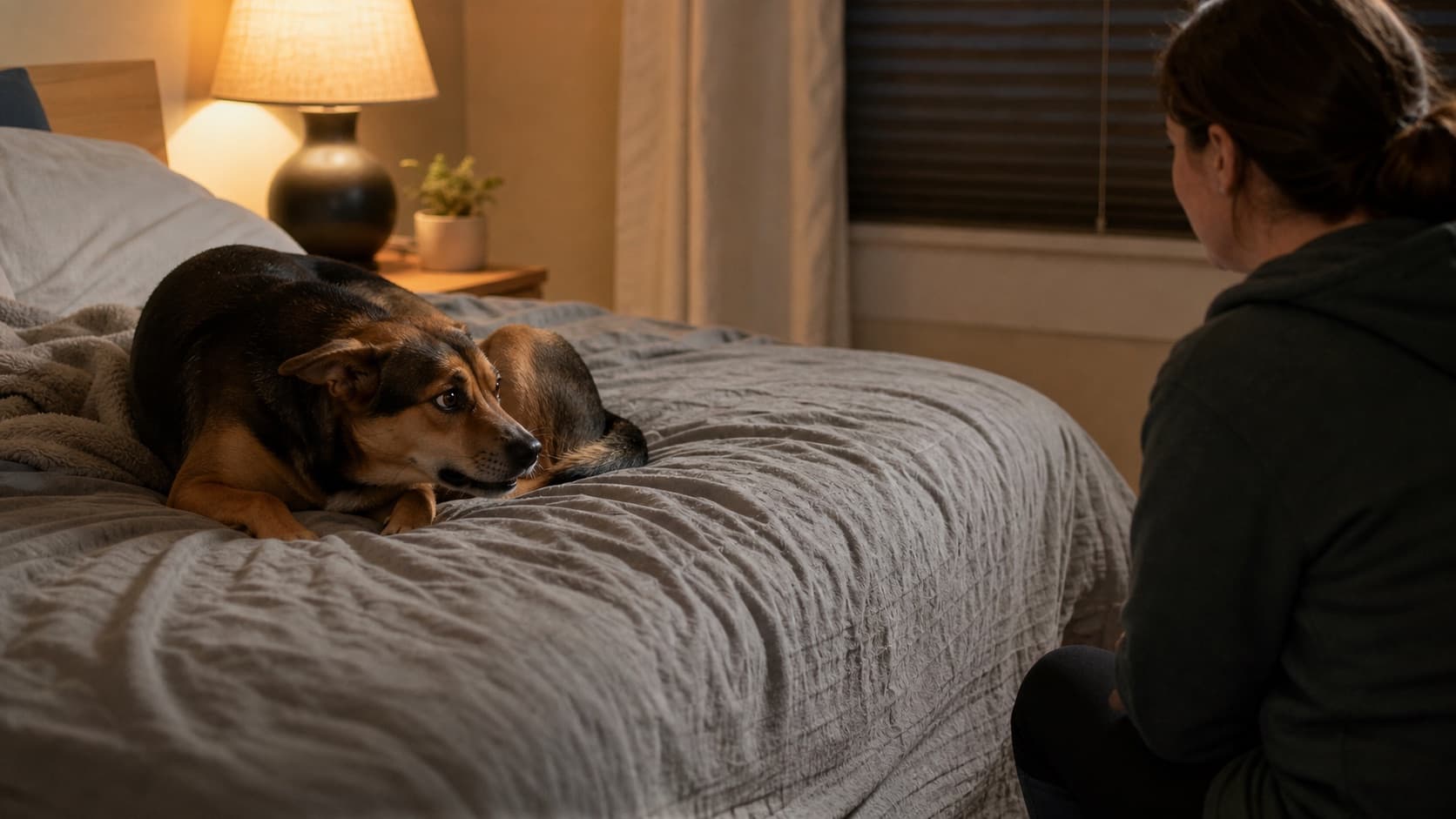
You roll over in bed and your dog growls. Maybe it is a low rumble from the foot of the bed. Maybe they stiffen when your leg brushes them. Maybe they growl only at night, only at one person, or only when someone tries to move them.
This is not a moment to argue with the dog. A bed is a small space, bodies are close, people are half asleep, and a startled or uncomfortable dog may react faster than usual. Growling is a warning signal. Take it seriously and make the setup safer before trying to train.
Why bed movement feels different
Sleep lowers awareness. A dog who is touched or bumped while resting may growl before they fully understand what happened. This is especially common in dogs who startle easily, senior dogs, newly adopted dogs, and dogs who sleep deeply.
Pain can also make movement feel threatening. If your leg bumps a sore hip, back, paw, ear, or belly, your dog may warn you to stop. Dogs with arthritis, injuries, skin pain, ear infections, or stomach discomfort may guard space more at night.
Some dogs feel trapped on the bed. Blankets, people, walls, and limited exits can make a dog less able to move away. Growling may be their way to create space.
Some dogs are guarding the resting place. The bed has value: warmth, height, people, scent, and comfort. If the dog has learned that people approaching or moving means they will be pushed off, grabbed, or crowded, they may become defensive.
Watch before and after the growl
Watch for stiffness before the growl. A dog may freeze, hold the head low, show whale eye, close the mouth, pin the ears, or stop breathing for a moment. They may place their chin over the bed, tuck paws under, or turn away while staying tense.
A sleepy startle may look like a sudden growl followed by quick recovery once the dog recognizes you. Guarding or discomfort may last longer. The dog may continue staring, keep the body stiff, or growl again if you move.
If your dog snaps, bites, blocks movement, or growls near children, treat the situation as a safety issue now.
Do not pressure the warning
Do not punish the growl. Punishment can remove the warning without removing the discomfort. A dog who feels unsafe and stops warning is not safer.
Do not shove, pull, drag by the collar, or physically roll the dog away. Those actions add pressure in a tight space and can lead to a bite.
Do not wait to see if the dog will "respect" you. This is not about winning bed space. It is about creating a sleeping arrangement that does not force conflict.
Make the scene safe first
If your dog has growled when you move in bed, change the nighttime setup before the next sleep period. Use a comfortable dog bed beside your bed, a gated sleep area, or a crate the dog already likes. The dog should have a place to rest without being bumped or moved.
Do not make the change by forcing the dog off the bed at midnight. During the day, teach a cheerful "off" or "bed" cue with high-value treats. Practice when everyone is awake and calm. Reward the dog for moving to their own bed, then let them relax there.
If the dog is already on the bed and growling, stop moving toward them. Call them off from a distance with food if they can respond. If they cannot respond, create distance and avoid reaching.
Map the exact bedtime trigger
Ask when the growling happens. Is it only when the dog is asleep? Only when touched? Only when one person enters bed? Only near pillows, blankets, or one side of the bed? Does the dog growl on couches too?
Track physical signs. Is your dog stiff after rising? Reluctant to jump? Sensitive when groomed? Licking a paw? Drinking more? Restless at night? These details matter for a veterinarian.
Also notice whether your dog can relax on their own bed. If they repeatedly return to the human bed and then growl when moved, you need better management and a clearer routine.
When to call a veterinarian
Talk with a veterinarian if the growling is new, increasing, linked to touch, happening in a senior dog, or paired with stiffness, limping, appetite changes, restlessness, licking, panting, or sleep disruption. Pain is one of the most important causes to rule out.
Contact a qualified behavior professional if the growling involves guarding, snapping, biting, children, or repeated conflict over furniture. Professional support can help you build a plan without confrontation.
Rebuilding bed boundaries
Once safety and health have been addressed, rebuild the routine. Decide where your dog will sleep. Make that spot valuable with soft bedding, treats, and calm bedtime rituals.
Practice "go to bed" during the day. Reward the dog for stepping onto their bed, lying down, and staying while you move around. Keep sessions short. The dog should learn that their own bed is not a punishment; it is a predictable resting place where people do not crowd them.
If you eventually allow bed access again, add rules that reduce risk. Invite the dog up only when you are awake. Ask them off before sleep. Do not let them sleep pressed against legs if movement has been a trigger. Many households decide that separate sleeping is the kinder long-term plan.
The safer goal
The goal is not to prove that the dog should tolerate being bumped in bed. The goal is a night routine where nobody is startled, trapped, or forced into a warning.
A dog who growls when you move is giving you a chance to adjust before a bite happens. Respect the warning, check for pain, create space, and use professional help when the pattern involves guarding or safety risk.