
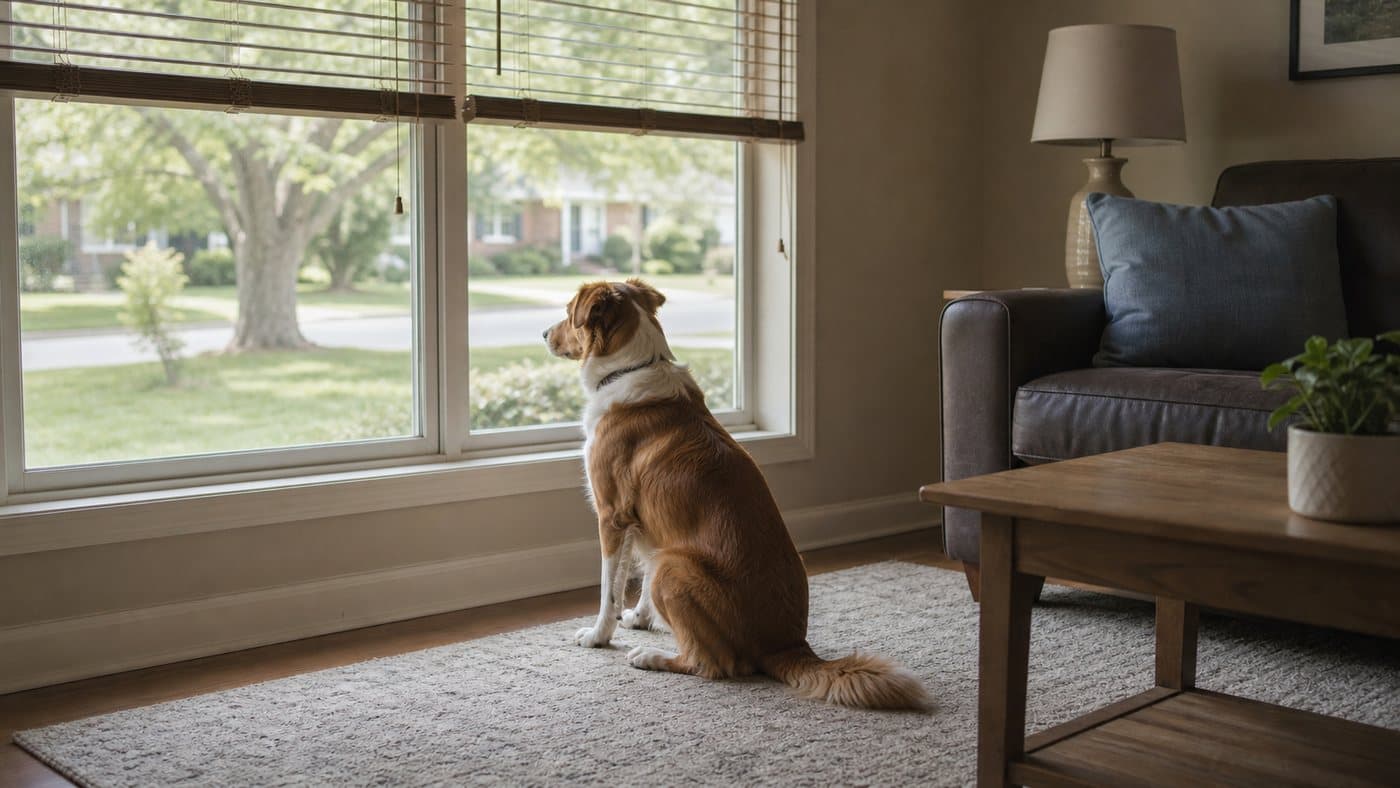
Window barking often becomes a job. Your dog watches the same sight line, notices people, cars, dogs, mail carriers, or shifting light, barks, and then the trigger eventually disappears. From the dog's point of view, the barking may feel effective.
This is why window barking can grow even when no one rewards it on purpose. The environment rewards it. The person walks away. The delivery van leaves. The dog learns that patrolling works.
Find the busiest sight line
Write down the busiest barking windows for three days. Many dogs bark more during school pickup, mail delivery, evening dog walks, or apartment hallway traffic. Also watch body language. A loose dog who barks and bounces may be excited. A stiff dog who scans, refuses food, or cannot leave the window may be worried.
Notice whether your dog can respond after the first bark. If they can turn back for a treat, you have a training opening. If they cannot disengage, the setup is too hard.
Do not correct from across the room
Do not yell from another room. It often adds energy and teaches the dog that window events create household chaos. Avoid startling devices or punishment collars. They may stop sound while making outside movement feel more threatening.
Remove rehearsal before training
Block rehearsal during predictable busy times. Use window film, curtains, a gate, or a different resting area. Add white noise if hallway or street sound is part of the trigger.
Then teach a reset. When your dog notices the window calmly, mark "yes" and toss food away from the glass. Reward moving away, not staring harder. Over time, the pattern becomes notice, report, disengage.
If barking appears suddenly in a senior dog or comes with confusion, pain signs, or nighttime restlessness, schedule a veterinary check.
Why rehearsal matters
Window barking is powerful because it repeats many times a day. A dog may see twenty tiny triggers before lunch: a neighbor, a truck, a dog across the street, a squirrel, a delivery person, a school bus. Each time, barking happens and the world moves on. The dog does not know the person was leaving anyway. The pattern still feels successful.
This is why "just letting him bark it out" rarely works. The dog is not only making noise. They are practicing scanning, escalating, and recovering slowly. Over weeks, the window becomes a workstation.
Give watching a beginning and an end
You do not have to block every window forever. Start with the worst window and the busiest times. Frosted window film on the lower half can preserve light while removing street-level movement. A gate can keep the dog out of the front room during delivery hours. A bed in a quieter room gives the dog a different job.
Add predictable observation times if your dog enjoys watching the world. For example, five minutes of supervised window time after breakfast, then curtains closed and a chew in another room. This keeps the activity from becoming an all-day self-appointed shift.
Teach "thank you, all done"
Pick a phrase you can say calmly. When your dog gives one alert bark or notices movement without barking, say the phrase, toss several treats away from the window, and guide them to another activity. The treat placement matters. Food at the window rewards staying at the glass. Food away from the window rewards disengaging.
Practice when triggers are mild. If you wait for the mail carrier at peak intensity, your dog may be too worked up to learn.
When it is more than alert barking
Consider extra help if your dog cannot rest during the day, barks until hoarse, redirects onto people or other pets, or seems panicked rather than alert. Also check health if window vigilance appears suddenly. Pain, sensory changes, and anxiety can make a dog more reactive to normal household movement.
Give your dog another daytime job
If window patrol is the most interesting thing in the house, your dog will keep choosing it. Add predictable alternatives before the busy window times: a food scatter in another room, a chew on a bed, a short sniff walk, or a simple training game. The replacement does not need to be fancy. It needs to happen before the barking loop starts.
For dogs who bark during work hours, create a morning setup. Bathroom break, sniff time, breakfast enrichment, then access to a quieter room. If the dog spends the first hour of the day rehearsing at the glass, the rest of the day often stays more reactive.
Keep your own response boring
Rushing to the window, yelling, or grabbing the collar can make outside movement feel like a major event. If you need to interrupt, move calmly. Say your reset phrase, toss food away from the window, and block access after the dog turns.
The goal is to make the window less important. Your tone, movement, and setup should all say, "We noticed it, and now we are done."
Window patrol is easing when
At first, progress may be your dog barking twice instead of ten times, taking food sooner, or leaving the window for a scatter. Later, progress may be longer naps during known trigger times. You are changing a daily habit, so measure recovery and frequency, not perfection.
If the dog can rest more, the plan is helping even before barking disappears.
Keep one quiet zone available every day, so your dog has somewhere to be off duty.