
Sudden aggression between household dogs should be taken seriously. The cause may be pain, illness, resource pressure, stress, social maturity, a scary event, or repeated small conflicts that finally escalated.
Separate first, investigate second
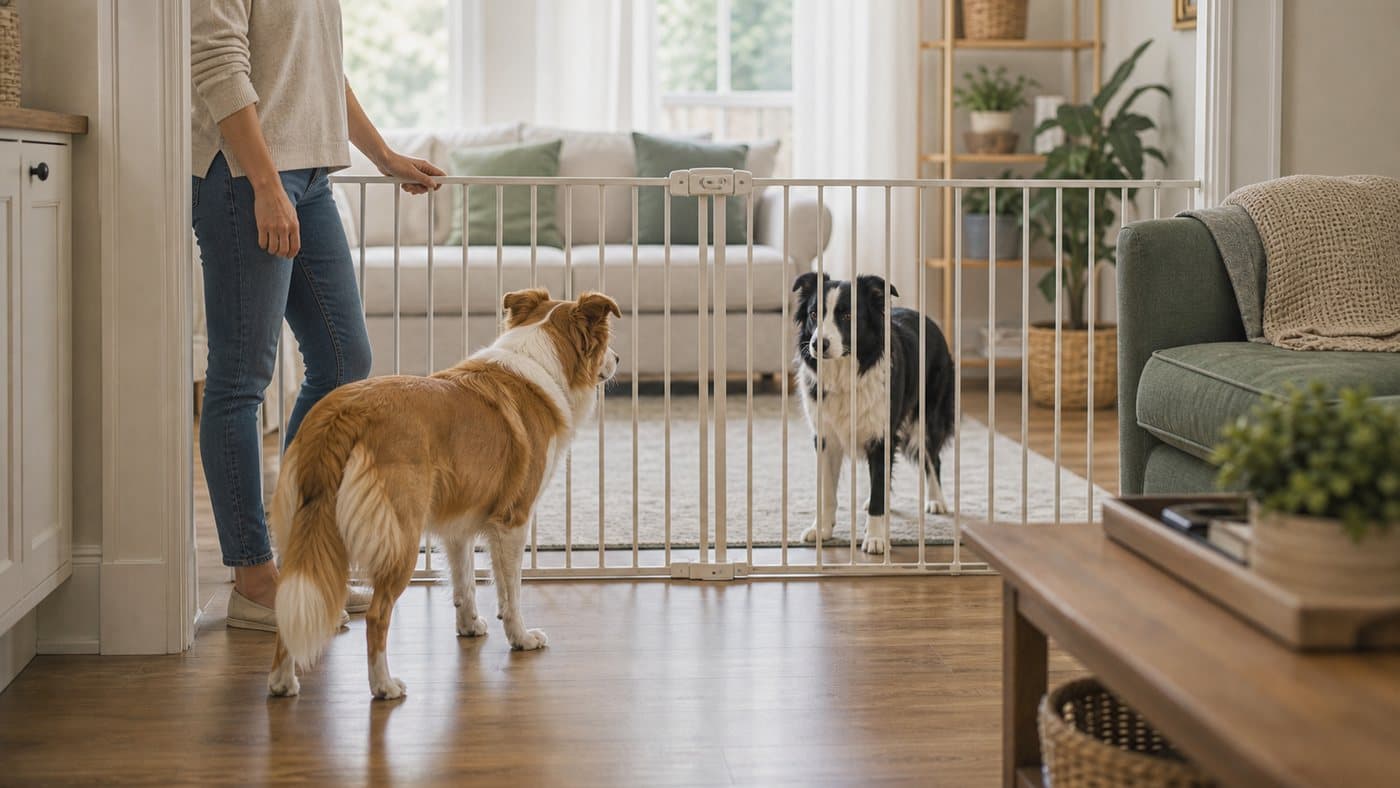
Separate the dogs when you cannot actively manage them. Use gates, crates if both dogs are crate-comfortable, closed doors, or separate rooms. Do not let them "work it out."
Reconstruct the thirty seconds before conflict
What happened right before the conflict? Food, toys, doorways, people arriving, tight spaces, resting spots, excitement, or one dog bumping another? Is one dog older, painful, or newly irritable?
Sudden behavior change warrants a veterinary check, especially if one dog seems stiff, sore, tired, or unusually reactive.
Make a resource map before reintroductions
Create a resource map: feeding, chews, toys, beds, doorways, and human attention. Manage these areas separately while you gather information.
Contact a vet and qualified behavior professional. Household dog aggression is workable, but safety and accurate trigger mapping matter.
Why sudden conflict needs investigation
When dogs who previously lived peacefully begin fighting or threatening each other, assume something changed. It may be health, pain, hormones, age, stress, a new resource, a schedule change, or one scary incident that altered the relationship. The goal is not to decide which dog is "bad." The goal is to find the trigger pattern and prevent rehearsal.
Pain is a common hidden factor. A sore dog may guard space, react when bumped, or become less tolerant of play. A veterinary check is important for the dog showing aggression and sometimes for the dog receiving it, especially if either dog is older or suddenly irritable.
Map the conflict scenes
Track exact moments. Conflicts often cluster around doorways, narrow halls, sofas, beds, food prep, chews, toys, greetings, excitement at windows, or human attention. Some happen when one dog returns from outside, the vet, grooming, or daycare with a different smell.
Notice body language before the outburst. Hard staring, blocking, hovering, freezing, standing over another dog, lip licking, whale eye, and slow movement can all come before a fight.
Manage predictable flashpoints
Use separation proactively. Feed separately. Pick up chews and high-value toys. Avoid crowded doorways. Give each dog protected rest. Use gates, doors, and leashes held by adults rather than letting dogs "work it out." Repeated conflicts make the pattern easier to repeat.
Do not punish one dog in the middle of conflict unless you must interrupt for safety. Harsh corrections can add fear and make the other dog predict punishment.
Reintroduce only below tension
Reintroduction should be slow and controlled: parallel walks, calm distance, brief shared time with barriers, and reinforcement for relaxed behavior. The plan depends on the trigger map and bite history.
If there has been a bite, injury, redirected aggression toward people, or fights you cannot interrupt safely, get professional help quickly. Household dog conflict can improve, but it deserves a careful, individualized safety plan.
Avoid the blame trap
In multi-dog homes, people often focus on which dog started it. A better question is what setup made conflict likely. Pain, crowding, food, arousal, and blocked exits can turn ordinary interactions into problems. Solving the setup protects both dogs and gives behavior work a fair chance.
Keep notes without making assumptions. A clear pattern is more useful to your veterinarian or trainer than a dramatic label.
A two-week management reset
After a serious conflict, many households need a reset period. This does not mean the dogs can never be together again. It means you stop rehearsing risky scenes while you collect better information.
For two weeks, feed separately, remove chews and high-value toys from shared spaces, manage doorways, and provide each dog with protected rest. Use barriers for exciting moments like visitors, meal prep, delivery sounds, and returning from walks. If one dog pesters the other, give the annoyed dog a real escape instead of waiting for a correction.
During this reset, track calm moments too. Which rooms are easy? Can the dogs walk parallel outside? Can they relax on opposite sides of a gate? Good data includes what works.
Questions to bring to the vet or trainer
Write down which dog changed first, whether either dog has pain signs, and whether the conflict happens around resources, space, excitement, or handling. Note any new medications, diet changes, schedule changes, visitors, moving, storms, fireworks, or boarding.
A professional will also want to know bite history. Did teeth touch skin? Was there puncture, shaking, chasing, or repeated attempts to re-engage? This information is not about blame. It shapes the safety plan.
What not to test
Do not reintroduce the dogs over a food bowl, on the couch, in a narrow hallway, or when both are highly excited. Do not hold collars and force face-to-face sniffing. Do not correct growling as proof of leadership. These tests can make both dogs less predictable.
The safer test is boring: distance, barriers, calm movement, and short sessions that end before tension rises. If the dogs cannot be managed safely, keep them fully separated until you have professional support.
Watch the dog who seems quiet
The loud dog is not always the only stressed dog. A quieter dog may be blocking, staring, hovering near resources, stiffening in doorways, or ignoring softer signals from the other dog. Watch both dogs before deciding what happened. If one dog repeatedly leaves and the other follows, that matters. If one dog freezes over a toy and the other keeps approaching, that matters too. A good plan protects both dogs from being pushed past their limit.