
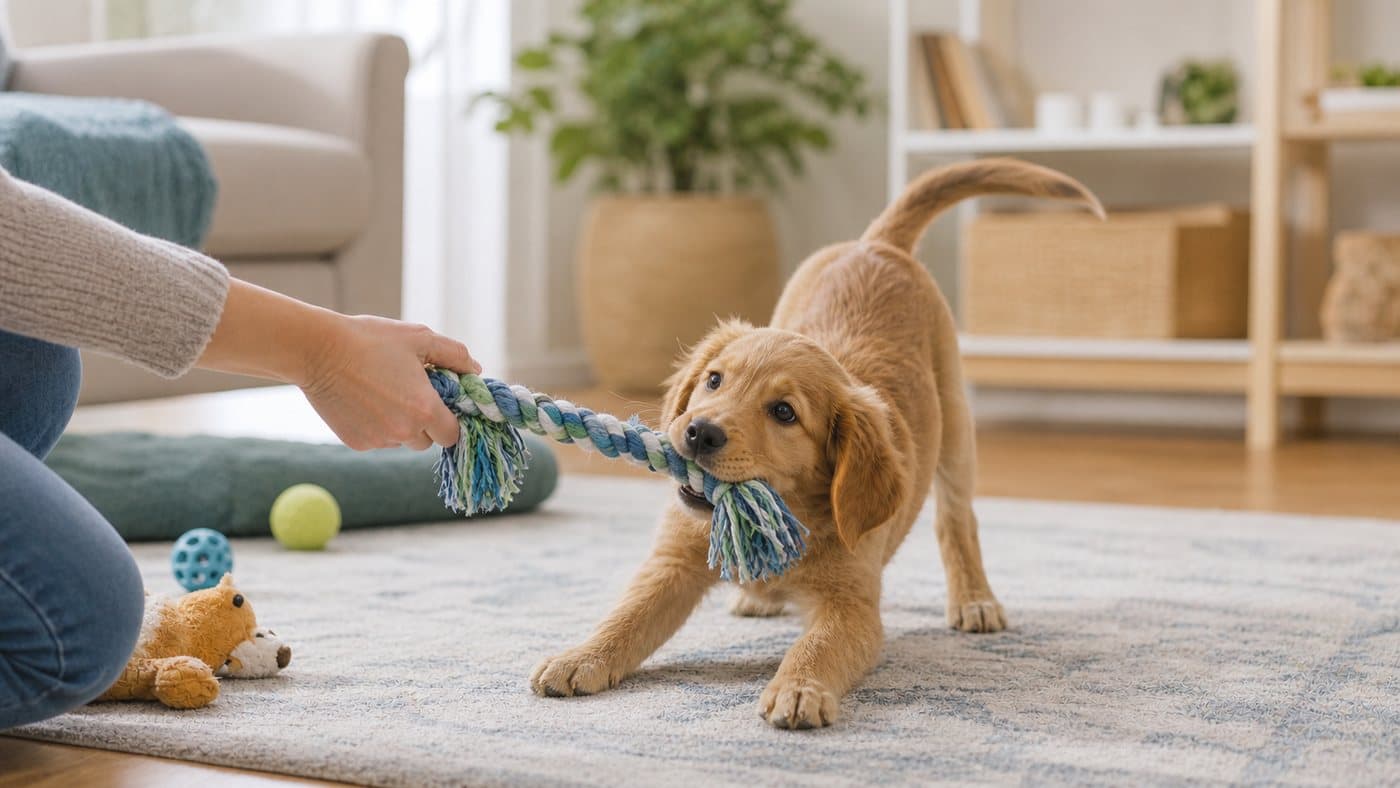
Puppy biting can feel personal, especially when tiny teeth find human skin ten times before breakfast. Most puppy biting is not aggression. It is development, arousal, teething, fatigue, and a puppy learning how to use a mouth in a human household.
That said, "normal" does not mean "ignore it." Puppy biting needs management and teaching before it becomes a practiced habit.
Normal mouthing is loose and recoverable
Normal mouthing often happens during play, greetings, handling, or tired evening bursts. The puppy may bounce, chase sleeves, grab ankles, switch to toys, and recover after a nap or food scatter. The body is usually loose, even if the behavior is intense.
Many puppies bite more when they are overtired. Owners often add more play because the puppy looks wild. The puppy actually needs sleep. A puppy who has been awake for hours may lose the ability to make good choices.
Teething can add pressure too. Chewing is a physical need, not a moral failing.
Biting that changes the risk level
Pay closer attention if the puppy becomes still and hard before biting, guards food or objects, growls when approached while chewing, breaks skin repeatedly, targets faces, bites during restraint, or cannot be redirected. Fearful biting during handling is different from playful mouthing during tug.
Also note the age trend. Biting should become easier to manage with sleep, routine, appropriate chew outlets, and consistent response. If it gets sharper, more defensive, or more unpredictable, get help early.
Common advice that backfires
Yelping loudly works for some puppies but excites others. Pushing the puppy away can become a wrestling game. Holding the mouth shut or alpha-rolling can create fear and defensive biting.
The goal is not to convince the puppy that biting makes you scary. The goal is to make biting unnecessary and make better choices easy.
Set the room up before teeth land
Keep toys within reach in every room where the puppy gets mouthy. Redirect before the puppy is already frantic. Use food scatters to lower arousal. Add planned naps in a crate, pen, or quiet puppy-safe space before evening chaos begins.
If teeth hit skin, calmly pause movement and change the setup. Step over a gate, offer a chew, or move the puppy to a rest area with something appropriate to bite. Keep it boring.
When help should come early
Contact a vet or qualified trainer if bites are deep, defensive, paired with guarding, directed at children, or escalating despite better sleep and management. Early help is much easier than waiting until the puppy is bigger and the behavior has a long history.
A practical bite scale
Green biting is loose, brief, and easy to redirect. The puppy can switch to a toy, eat a scatter, or settle after a nap.
Yellow biting is repetitive, harder, and tied to predictable situations: tired evenings, fast movement, visitors, leash frustration, or handling. This is the point to change the schedule and setup, not simply repeat "no."
Red biting is stiff, defensive, deep, directed at faces or children, paired with guarding, or getting worse week after week. Treat that as a safety issue and get qualified help.
Match the plan to the bite
If the bite is green, focus on prevention and redirection. Keep toys nearby, reward gentle play, and end the game before the puppy becomes wild. You are shaping ordinary puppy behavior.
If the bite is yellow, change the schedule. Look at wake time, evening stimulation, children running, leash frustration, and handling pressure. Yellow biting often improves when the puppy gets more sleep, shorter play, and clearer access to legal chewing.
If the bite is red, do not keep trying random internet tips. Deep bites, stiff body language, guarding, facial targeting, or child risk deserve a veterinarian or qualified force-free trainer. Professional help is not only for adult dogs. It is often most useful while the puppy is still young and the pattern is easier to change.
The evening biting pattern
Many puppies bite hardest in the evening because the day has been too long. The puppy looks energetic, but the behavior is disorganized: grabbing pants, launching at hands, ignoring toys, and biting harder when people move away. This is often overtired arousal, not a puppy who needs another hour of play.
Plan the evening before it falls apart. Offer dinner in a puzzle, take a calm bathroom break, then move the puppy to a pen or crate with a chew. Keep the room quieter. If the puppy is already frantic, use a food scatter on the floor before asking for anything.
Handling-related biting
Puppies also bite when human hands predict pressure: collar grabs, wiping paws, lifting, brushing, harnessing, or removing objects. That kind of biting needs consent-based handling practice. Touch the harness, feed. Lift one paw for half a second, feed. Release before the puppy struggles.
If you only handle the puppy when something unpleasant is about to happen, hands become suspicious. Tiny cooperative-care reps make handling predictable and worth participating in.
What progress should look like
Progress does not mean your puppy never mouths. It means the biting is easier to interrupt, the puppy can choose toys more often, the skin pressure softens, and the worst episodes happen less frequently.
If the puppy gets more intense week after week, guards chews, stiffens before biting, or bites children, stop treating it as generic puppy chaos and get a force-free professional involved early.
Make a bite plan before the wild hour
The best puppy biting plan starts before teeth hit skin. Identify the predictable wild hour and set up the environment early. Put toys in reach, use a gate, take a potty break, and offer a chew or lick activity before the puppy is frantic.
If children are involved, separate running games from puppy access. Puppies are not failing when they chase moving kids. They are doing what movement invites. Adults need to manage the scene before everyone is overwhelmed.
Teach soft choices
Reward the puppy for gentle mouth choices when they are calm. Offer a toy, praise soft engagement, and pause before intensity climbs. Practice hand targets, toy trades, and settling on a mat outside the hardest times.
Do not wait until the puppy is biting hard to start teaching. A puppy who has practiced softer choices all day has more options when arousal rises.
What owners can safely ignore
You do not need to correct every tooth touch as if it predicts adult aggression. Puppies explore with their mouths. A single wild evening after a missed nap is information about fatigue, not a character problem.
What you should not ignore is a pattern that becomes harder, more targeted, or more defensive. Evergreen puppy advice works best when it separates normal development from warning signs instead of treating all biting as either harmless or dangerous.
The notes that reveal the bite pattern
Track sleep, time awake, bite intensity, and what happened right before the worst episodes. If biting improves after naps, fatigue was a major driver. If biting happens during handling, focus on cooperative care. If biting happens around chews or stolen items, treat it as a guarding signal and get help sooner.
The pattern tells you which plan the puppy needs.
That is much more useful than treating every bite as the same problem.