
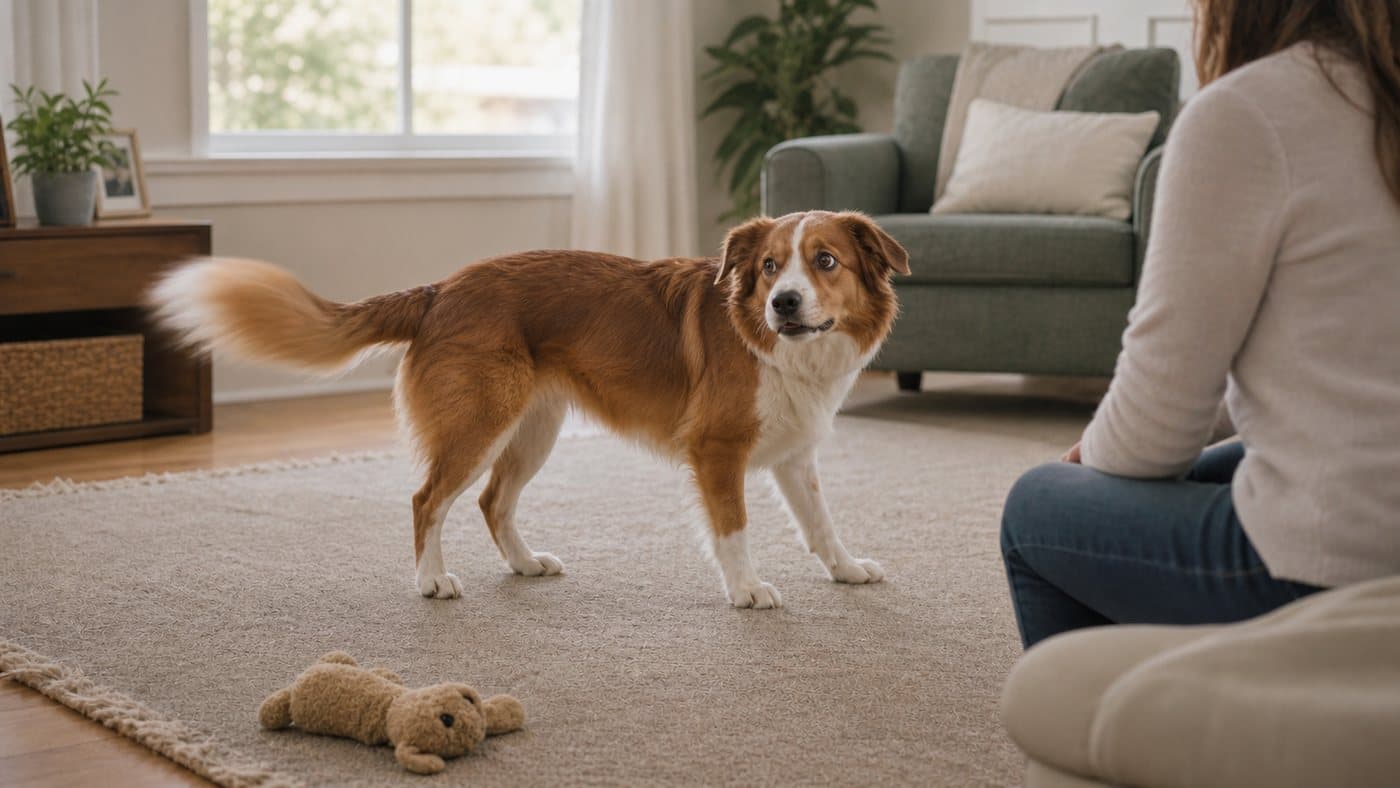
A wagging tail means arousal, not automatically happiness. A dog can wag while conflicted, worried, frustrated, or warning. If the tail is moving and the dog is growling, treat the growl as the clearer signal.
Read the whole dog before the tail
Look at the whole body. Is the tail loose and sweeping, or high and stiff? Is the mouth soft or closed? Are the eyes hard? Is the dog leaning away, freezing, or guarding an item?
A loose body with play bows is different from a stiff body with a hard stare.
Do not let the wag overrule the warning
Do not tell people, "It's fine, the tail is wagging." Do not punish the growl. Growling is useful communication.
Make the first response boring and safe
Add space and reduce pressure. Stop the greeting, pause petting, move children away, or trade for the item. Then identify the trigger.
If wagging plus growling happens around food, toys, children, sleeping spaces, or handling, create a safety plan and involve a qualified behavior professional.
Tail movement is not a simple mood label
A wagging tail means arousal, not automatically friendliness. Dogs wag when happy, conflicted, frustrated, worried, or highly alert. The rest of the body tells you which direction the emotion is moving.
A loose body, curved spine, soft eyes, open mouth, and play bows may point toward playful excitement. A stiff body, high or tight tail, hard stare, closed mouth, lowered head, freezing, or weight shifted forward makes the growl more serious. A tucked wag with lowered body can mean appeasement or fear.
Situations where this mix is common
Dogs may wag and growl during tug, rough play, greeting pressure, resource guarding, handling, or when a person approaches a resting spot. In play, the dog usually takes breaks, re-engages loosely, and responds to pauses. In conflict, the dog may freeze, hover over an item, block access, or become still after the growl.
Children make this signal especially important. A child may see wagging and assume the dog wants contact, while the growl is saying the opposite. Adults should treat the growl as the clearest message.
What to do in the moment
Pause the interaction. Stop reaching, stop petting, move the child away, or trade for the item. Give the dog space without scolding. If it was play, take a break and see whether the dog returns loose and relaxed. If the dog remains stiff or guarded, end the interaction.
Do not test the dog by repeating the same pressure. The goal is to learn from the signal, not prove the dog will tolerate more.
Prevent future confusion
Teach family members to describe the whole body: tail, mouth, eyes, weight, movement, and context. If growling happens around resources, sleeping spaces, grooming, or children, use management immediately and get hands-on help. The wag does not cancel the growl; both are part of the message.
A quick body scan
Before deciding what the wag means, scan from nose to tail. Is the mouth soft or closed? Are the eyes relaxed or hard? Is the dog moving in curves or standing still? Can they walk away? This quick scan gives a better answer than focusing on the tail alone.
When in doubt, choose space. Giving a dog room is safer than assuming a wag means consent.
That choice keeps the warning useful and prevents pressure from escalating.
How to tell play from conflict
Play growling usually has movement breaks. The dog may bounce away, curve back, offer a toy, shake off, or pause naturally. Their body stays loose, and if you stop the game, they can reset or invite more play without becoming still and intense.
Conflict looks different. The dog may growl while holding still, hovering over a chew, leaning away from a hand, blocking an item, or staring hard. They may wag in short, tight movements while the rest of the body looks frozen. If the dog cannot easily disengage, do not keep testing the interaction.
The safest rule is simple: play can pause. If you stop and the dog loosens, takes a breath, and chooses to re-engage, that is useful information. If stopping makes the dog guard, stiffen, or track someone closely, end the situation and add space.
What to say to guests
Guests often focus on the tail because it is the easiest signal to notice. Give them one clear instruction before they interact: "If you hear a growl, stop and step away, even if the tail is moving." That sentence protects everyone better than a long explanation in the moment.
Ask guests not to reach over the dog's head, crowd the dog on furniture, take toys, or keep petting after the dog turns away. For uncertain dogs, greetings can happen with tossed treats on the floor rather than hands on the body.
When mixed signals need professional support
Get professional support if wagging plus growling happens around children, food, toys, chews, beds, grooming, or attempts to move the dog. Also take it seriously if the growl is new, the dog has snapped before, or the body language is getting stiffer over time.
A veterinarian can rule out pain or discomfort that makes handling harder. A qualified behavior professional can help you read the pattern and build safer routines. The goal is not to stop the dog from communicating. The goal is to reduce the pressure that makes the warning necessary.
The safest interpretation
If two signals conflict, believe the more cautious signal. A wag can be excitement, but a growl is a request for change. Treat the moment as "this dog needs space" until the body loosens and the trigger is gone. That habit protects people and also teaches the dog that warnings work without needing to escalate.