
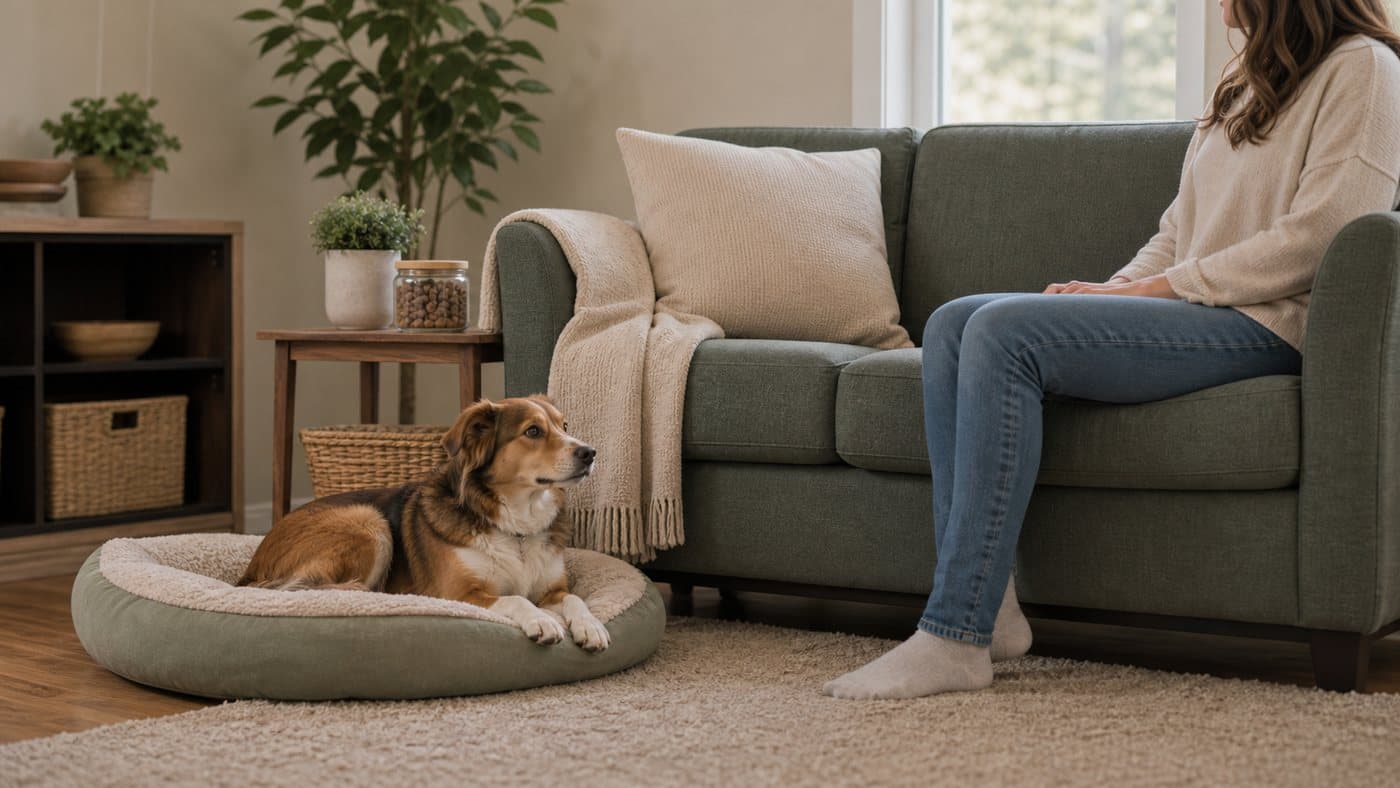
Dogs can guard resting places the same way they guard chews or food. The couch or bed can represent comfort, height, warmth, proximity to people, or relief from pain. Guarding often appears when someone approaches, reaches, or tries to move the dog.
The useful question is not whether the dog is "being dominant." It is what the dog thinks they might lose, and whether anyone is close enough to get hurt.
Start with the exact moment
Does your dog stiffen, whale eye, growl, or snap when approached on furniture? Is it worse at night, when tired, around children, or when physically moved? Does your dog have pain or mobility issues?
Look for the trigger point. Some dogs react when a person walks toward the couch. Some react only when touched. Some react when a specific person joins the bed. The plan is different depending on where the pressure begins.
Do not turn the warning into a contest
Do not drag the dog off furniture. Do not punish growling. That can make warnings less predictable.
Manage the furniture before conflict
Prevent conflict while training. Use gates, leashes before the dog settles, or bedroom doors. Teach an upbeat "off" cue with food when there is no conflict. Reward the dog for moving to their own bed.
If there has been snapping, biting, or child exposure, contact a veterinarian and qualified force-free trainer. Furniture guarding needs a safety plan.
Why furniture becomes valuable
Couches and beds are not just furniture to a dog. They can be warm, elevated, close to people, and associated with rest. A dog may guard the spot itself, the person sitting there, a chew hidden there, or the ability to avoid being moved.
Pain can also be part of the picture. A dog with sore hips, back pain, dental pain, or age-related stiffness may react when approached because they expect handling to hurt. If guarding appears suddenly, especially in an older dog, start with a veterinary check.
Change the setup before training
The first goal is to stop confrontations. If the dog guards the couch at night, close access before evening. If the problem happens when children run into the room, use gates. If the dog guards the bed, keep the bedroom door closed or use a leash before the dog settles, not after conflict starts.
Do not wait until the dog is growling and then try to train. At that point you are negotiating over a valued resource.
Teach movement when nothing is at stake
Train an "off" or "move" cue away from conflict. Toss a treat on the floor, say the cue as the dog follows, then reward again after all four feet are down. Practice with low-value locations first. The cue should predict good things, not the end of comfort.
Also build a great alternative resting place. Use a bed with real value: good location, soft surface, occasional chews, and calm praise. If the dog only loses comfort when moving off furniture, they have little reason to cooperate.
Avoid the moves that remove warning signs
Avoid grabbing collars, pushing the dog, leaning over them, or trying to prove ownership of the couch. Those actions can make guarding more intense. Avoid letting visitors or children handle the situation.
If your dog has snapped, bitten, trapped someone on furniture, or guarded around children, get individualized help. Furniture guarding can often improve, but the plan needs management, health checks, and careful training rather than confrontation.
Track the high-risk times
Furniture guarding often appears at predictable moments: evening tiredness, guests arriving, children moving around, or people trying to go to bed. If you know the pattern, manage before the dog settles in the problem spot. Prevention gives you room to train when everyone is calmer.
A sample evening plan
If guarding happens mostly at night, change the routine before the dog gets tired. Close the bedroom door before dinner. Put a comfortable dog bed in a nearby spot. Give the dog a chew or scatter food there while the couch is still boring. If the dog is allowed on furniture sometimes, make that access predictable and low-conflict rather than a negotiation at bedtime.
The order matters. Moving a relaxed dog with food before they settle into the guarded spot is different from bribing a growling dog to leave. In the first case, you are preventing conflict. In the second, you may be standing too close to a dog already worried about losing the space.
Red flags on furniture
Take the situation more seriously if the dog blocks a person from moving, guards one family member from another, snaps when touched, growls at children near the couch, or reacts when someone simply walks through the room. Also note sudden changes. A dog who never guarded furniture before and now reacts when moved may be painful.
Do not assume the dog is trying to control the house. Guarding is usually about access, comfort, fear of being moved, or physical discomfort. The safest plan treats the behavior as information.
Furniture pressure is dropping when
Progress may look quiet. The dog chooses their bed more often. People stop reaching over them. The dog responds to "off" when already calm. Guests and children are kept out of the conflict. Growling becomes rare because the setup no longer asks the dog to defend the space.
If the only improvement is that the dog growls less after being punished, that is not enough. You want less tension, easier movement, and safer routines, not a silent dog who still feels cornered.
If the dog guards only one person
Some dogs guard the bed or couch most intensely when a favorite person is sitting there. The dog may be guarding the person, the location, or the predictable comfort of being beside them. Have that person stand up and move away before asking the dog to move, rather than reaching over the dog. Practice calm stationing on a nearby bed while the person sits down, gets up, and walks away. Keep visitors and children out of this practice until the pattern is much safer.