
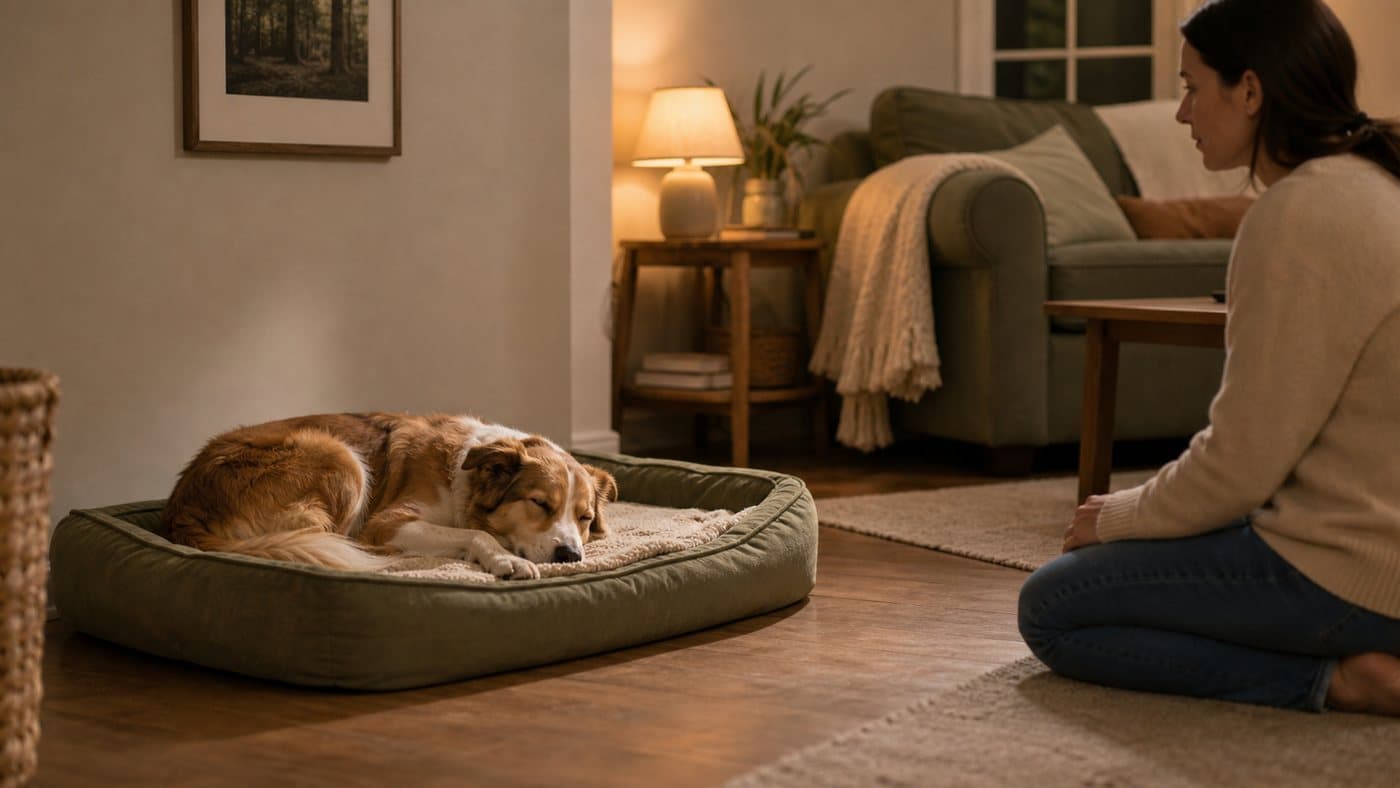
A dog who snaps when woken up may be startled, frightened, painful, or disoriented. This is a safety issue, especially around children or visitors.
Find exactly how the dog is being woken
Does snapping happen only when touched while sleeping? Is the dog older, hard of hearing, painful, or newly adopted? Do they snap from deep sleep, on a bed, in a crate, or when guarding a resting place?
Sudden snapping can be a medical clue. Pain, ear issues, vision changes, and cognitive changes can all affect startle responses.
Do not reach into sleep
Do not punish a dog for being startled awake. Do not let children wake the dog. Do not reach into a crate or bed to move a sleeping dog.
Build a no-touch rest rule
Wake the dog with sound from a distance before approaching. Teach a cue to move off furniture when awake. Give the dog protected resting spaces where no one touches them.
Schedule a veterinary check if the behavior is new, worsening, or paired with pain, aging, or confusion. Work with a force-free professional if there is bite risk.
Why waking can trigger a snap
Sleep startle is different from a dog choosing to be difficult. A sleeping dog may wake before they understand who is touching them. If the dog is older, sore, hard of hearing, visually impaired, or sleeping deeply after stress, the startle response can be stronger.
The location matters too. Dogs are more vulnerable when asleep in a crate, bed, couch corner, under a table, or near a valued person. A hand reaching into that space can feel sudden even if the human meant well.
Make rest zones predictable
Create places where the dog is never touched while sleeping. This is especially important in homes with children. A bed, crate, gated room, or quiet corner can become a protected zone. Everyone in the home should follow the same rule: call the dog from a distance instead of reaching in.
If the dog sleeps on furniture, teach a cue to wake and move when the dog is already alert. Practice during the day. Say the cue, toss a treat on the floor, and let the dog step down voluntarily. Do not grab collars or push the dog while they are groggy.
Write down the pattern
Write down when snaps happen. Is it only at night? Only when touched on one side? Only when children approach? Only in a crate? Do you see stiffness, limping, ear sensitivity, cloudy eyes, confusion, or increased irritability at other times?
These details help separate startle, pain, guarding, and handling sensitivity. A veterinarian can check for pain, ear problems, vision changes, neurologic issues, or age-related changes.
What to do after a snap
Do not punish after the fact. Instead, make the next incident less likely. Increase distance, change sleeping arrangements, and supervise children more actively. If a bite broke skin, if the dog moves toward people after waking, or if the behavior is worsening, involve a vet and qualified behavior professional promptly. Snapping around sleep is a safety issue, but it is also information you can use to protect the dog and the household.
Household rule to adopt today
Let sleeping dogs wake themselves whenever possible. If you need the dog to move, use sound first, then food tossed away from the resting spot. This rule is simple enough for guests and children to understand, and it prevents the most common setup for sleep-startle incidents.
Visitor and child instructions
Make the rule visible before people interact with the dog. Guests should not bend over a sleeping dog, reach into a crate, sit beside a dog who is tucked into a corner, or touch the dog from behind. Children should be taught to ask an adult instead of waking the dog themselves.
If visitors are staying overnight, set up the dog behind a gate or in a bedroom before the house gets busy. A tired dog in a crowded room is more likely to choose a protected spot and then be startled when someone forgets the rule.
If your dog hides to sleep
Some dogs choose tight spaces because they feel safe there. Under tables, behind chairs, in closets, and inside crates can be good resting choices, but they can also create startle risk if people reach in. Let the dog have the space. Call them out instead of entering it with your hands.
If the dog hides more than usual, seems confused, startles at normal sounds, or snaps when touched on one side of the body, schedule a veterinary check. A change in sleep behavior can be connected to pain, hearing, vision, or neurologic changes.
What a professional may change
A force-free trainer may help teach predictable wake-up cues, voluntary movement from resting spots, and safer furniture routines. A veterinarian may look for pain, ear disease, arthritis, dental pain, sensory decline, or cognitive changes. These pieces work together: behavior training is much fairer when pain and sensory issues are addressed.
Until you know more, do not test the dog by touching them while they sleep. The safest progress is a dog who gets more uninterrupted rest and fewer surprise hands near their body.
If the dog shares your bed
Bed sharing can make sleep startle harder because people move, roll over, and touch the dog without meaning to. If snapping has happened on the bed, create a separate sleeping spot before the next night. Make it comfortable and close enough that the dog is not isolated if they are used to sleeping near you. This is not punishment. It is a safety change while you investigate pain, startle, and resting-space pressure.