
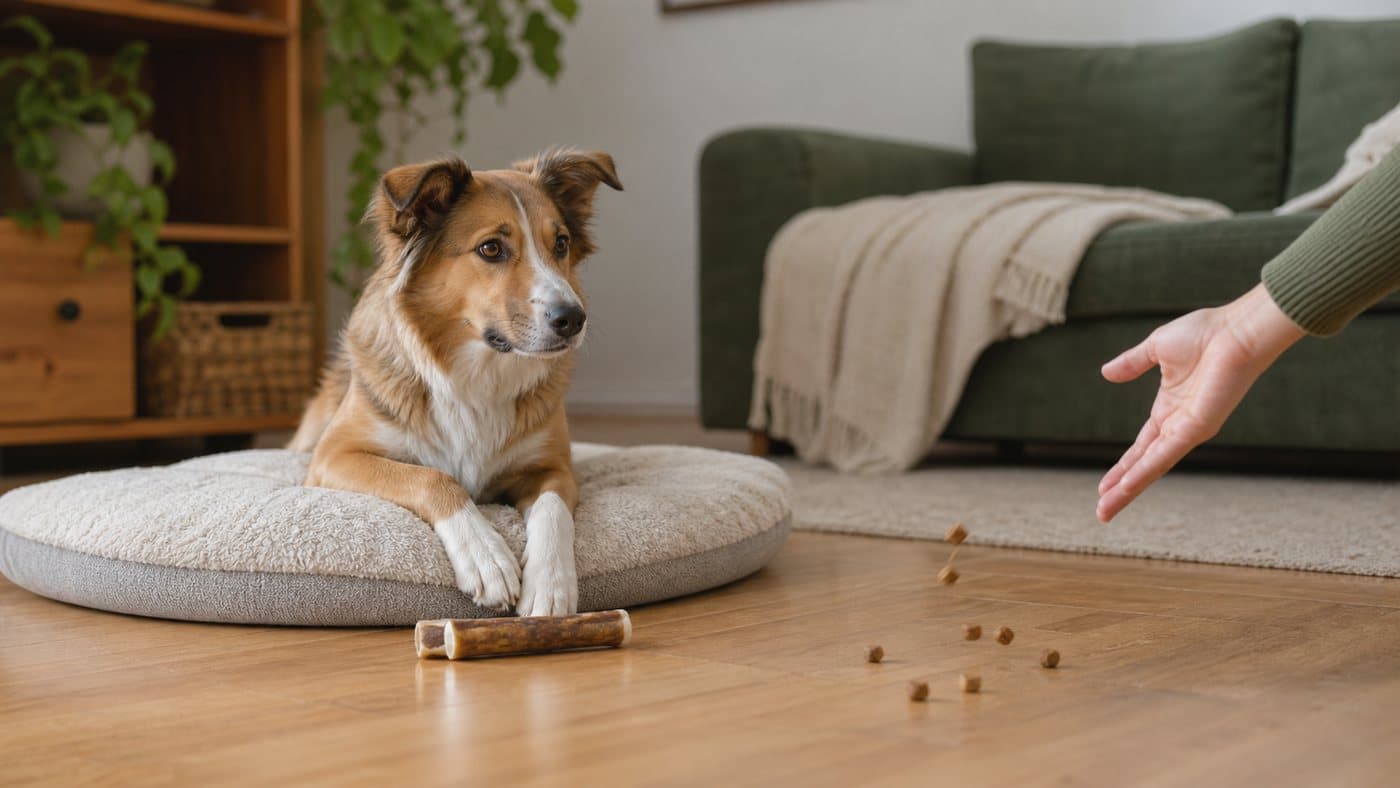
If your dog growls when you take something away, pause before you focus on the growl itself. The growl is not the root problem. It is a warning signal that your dog is worried about losing something valuable.
This pattern is often called resource guarding. The resource might be food, a chew, a toy, a stolen sock, a sleeping spot, another dog, or even a person.
The growl is part of a longer sequence
Growling says, "I need more space" or "I am not comfortable with what is about to happen." Some dogs guard because things have been taken from them repeatedly. Some guard because the item is rare or exciting. Some guard because pain, hunger, stress, or competition makes them feel less secure.
Early signs often come before the growl: eating faster, freezing, lowering the head over the item, turning the body away, showing whale eye, hovering, or grabbing the object and moving away.
The mistake that makes guarding less predictable
Do not assume your dog is trying to dominate you. Do not punish the growl. If punishment stops the warning but the fear remains, the next warning may be a bite.
Also do not practice taking the bowl away to "show who is boss." That teaches the dog that human hands predict loss. A safer goal is teaching that people approaching resources predict better things, not conflict.
Make the scene safe before training starts
If children are in the home, manage the environment first. Children should not approach a dog with food, toys, chews, stolen items, or resting spots. Use gates, closed doors, and planned chew zones.
Do not chase the dog. Chasing can turn the item into a higher-value prize and increase defensive behavior. If the object is not dangerous, create distance and trade calmly. Toss high-value food away from the item so the dog can choose to move.
Sort the item before you choose a response
If the item is harmless, such as a sock or tissue, do not rush in. Distance lowers pressure. A calm trade is safer than a chase.
If the item is dangerous, such as medication, cooked bones, sharp objects, chocolate, grapes, or something that could block the gut, safety comes first. Use high-value food to move the dog away if you can do that without reaching into their mouth. After the moment is over, tighten prevention so the same emergency is less likely to repeat.
If the item is a daily resource, such as a food bowl, chew, couch, crate, or sleeping spot, treat it as a pattern. One trade will not solve it. You need management, predictable routines, and lower-pressure practice.
Notice who, when, and how intense
List every guarded item and the intensity of the response. Is it only long-lasting chews? Food bowls? Trash? Tissues? Human beds? Does the dog guard from adults, children, other dogs, or everyone?
Notice whether guarding appears more when the dog is tired, hungry, in pain, newly adopted, or living with another pet who takes things.
Decide whether this is urgent, routine, or training
Use three categories before you move. An urgent item can hurt the dog: medication, cooked bones, sharp plastic, grapes, chocolate, string, or anything that could obstruct the gut. For urgent items, prioritize distance, food tossed away, and a veterinarian or emergency call if the dog swallowed it. Do not turn the emergency into a wrestling match if that increases bite risk.
A routine item is something you can control before it appears: chews, meals, beds, trash, laundry, and toys. These should be managed with doors, gates, planned chew locations, and predictable rules. The best time to handle a routine item is before the dog has it.
A training item is low value and safe. That is where practice begins. A cardboard tube, boring toy, or empty bowl lets you teach trades without asking the dog to surrender the thing they care about most. Starting with the hardest item is the common error.
The first safer training step
Start with management and trades, not tests. Give chews in a low-traffic area. Walk by at a distance and toss a treat without reaching. Teach a cheerful "trade" with boring objects first, then slowly build value.
If there has been snapping, biting, guarding around children, or guarding of unpredictable items, contact a qualified trainer or veterinary behavior professional. Resource guarding is workable, but it deserves a real safety plan.
Map the guarded item and the person approaching
Write down every item your dog values and rank the response. A tissue may cause running away. A bully stick may cause freezing. A food bowl may cause growling only when another dog approaches. This map prevents you from treating all items the same.
Also write down who matters. Some dogs guard only from other dogs. Some guard only from children. Some guard from one adult who has a history of taking items away. The training plan should match the exact pattern.
A safer trade routine
Start with objects your dog barely cares about. Say "trade," toss several pieces of high-value food away from the object, and calmly pick up the item only after your dog has moved away. Then give the item back when it is safe. Returning the item is powerful because it teaches that human approach does not always mean permanent loss.
Do not practice with dangerous objects first. If your dog has a cooked bone, medication, or sharp item, prioritize safety and call a professional for a prevention plan afterward.
Children and guarded items
If a child is in the home, management is the training plan until a professional helps you. Children should not take toys, reach into bowls, approach chews, climb on resting dogs, or retrieve stolen items. Use gates, closed doors, and adult-controlled chew times.
The goal is not to make a child "better at reading dogs." The goal is to prevent situations where a dog has to warn a child at all.
What a better pattern looks like
Progress does not mean your dog lets anyone grab anything at any time. That is an unsafe goal. Progress means your dog starts to trust predictable routines. They may lift their head when you approach instead of freezing. They may move away from an item for a trade instead of clamping down. They may eat at a normal pace when people pass at a distance.
Look for small changes in tension. Softer eyes, slower eating, loose shoulders, and the ability to disengage are meaningful. A dog who can leave a low-value object for a treat is building the foundation for harder situations later.
Keep sessions short and boring. One or two easy trades with safe objects are better than a long practice session that makes the dog suspicious. If your dog starts hovering, grabbing items faster, or carrying objects away when you enter the room, the plan is moving too quickly.
When not to train alone
Get professional help if the guarded items are unpredictable, if your dog guards from children, if there has been a bite, if the dog guards sleeping spaces, or if the behavior appeared suddenly in an adult dog. Pain, stomach discomfort, hunger, stress, or conflict with another pet can make guarding sharper.
Until you have help, avoid set-ups that require taking things by force. Put tempting trash, laundry, medication, bones, and children's toys out of reach. Prevention is not giving in to the dog. It is removing rehearsals while you build a safer way to handle resources.
What to keep consistent
The long-term rule is simple: do not make your approach predict loss. If people walking toward the dog usually means pressure, grabbing, or scolding, guarding gets sharper. If people approaching at a safe distance predict space, trades, and predictable routines, the dog has less reason to defend every item.