
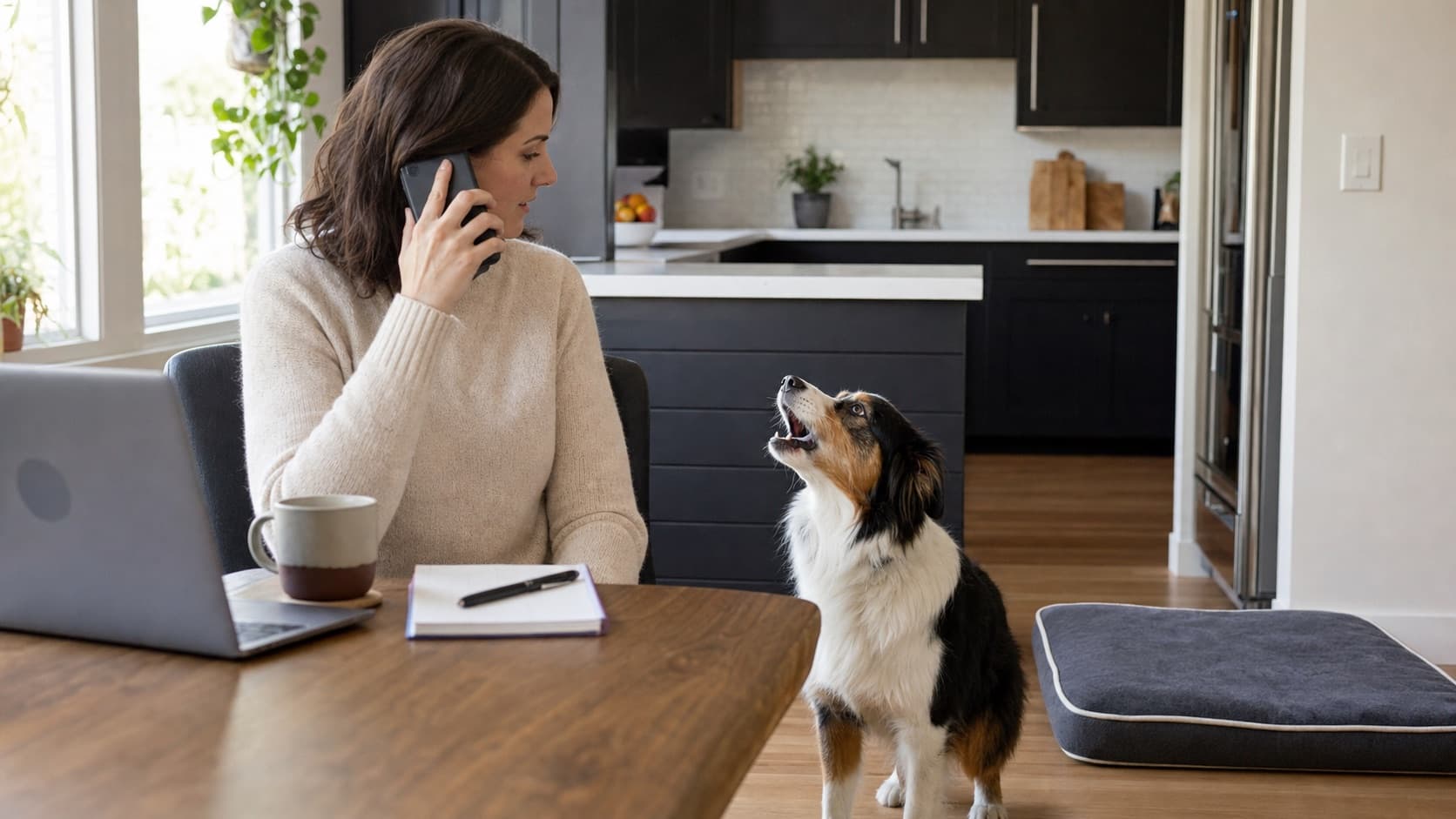
Some dogs seem calm until the phone rings. Then they bark, paw, whine, bring toys, jump on the couch, or stare at you with growing frustration. The strange part is that you may not be doing anything exciting. You are just talking.
To your dog, a phone call can change the whole social pattern. Your voice changes, your eyes move away, your body becomes less available, and the usual response to the dog disappears. If barking has ever made you pause the call, look down, toss a toy, feed a treat, or say "stop," the dog may learn that barking works.
Why phone calls trigger barking
Phone calls create a clear attention shift. You are present, but not socially available. Many dogs find that harder than a person leaving the room.
Your voice may also be confusing. Dogs hear you talking in a social tone, but there is no visible person in the room. Some dogs become alert. Others become excited because phone calls predict long periods of boredom.
Routine matters too. If calls often happen during work hours, after dinner, or when you sit at a desk, the dog may have learned a pattern: phone comes out, owner disappears into the conversation, dog has nothing to do.
Is it attention barking or anxiety?
Attention barking often has a pushy, strategic feel. The dog barks, watches your face, pauses to see what happens, then barks again. They may bring a toy, paw, jump, or nudge your arm.
Anxious barking may look less flexible. The dog may pace, pant, tremble, stare at the door, refuse food, or struggle to settle even after the call ends. If phone calls happen before departures or during tense conversations, the dog may be reacting to stress cues.
Some dogs are simply overstimulated by the sound of speakerphone, ringing, notification tones, or animated human voices.
Do not save training for real calls
Do not assume your dog is trying to ruin your call. They are responding to a pattern that has become meaningful.
Do not assume scolding is neutral. Saying "quiet" again and again may still be attention. If your dog wants interaction, your frustration can become part of the routine.
Do not wait until an important call to train. The dog needs practice during fake, low-stakes calls when you can control the setup.
Find which part of the call starts it
Notice which part triggers the barking. Is it the ringtone, you picking up the phone, speakerphone, your seated posture, laughing, long silence, or the first few minutes after you stop interacting?
Also notice what the dog gets after barking. Do you look at them? Touch them? Toss food? Open a door? End the call? Even accidental patterns can train behavior.
Track whether your dog can settle with a chew or mat during short practice calls. If they cannot settle even with support, lower the difficulty and look for anxiety or unmet needs.
Build the phone-call routine before the call
Create a phone-call routine before the bark starts. Choose a mat, bed, crate with an open door, or cozy spot near your workspace. Practice when you are not on a real call.
Pick up your phone, say one sentence, then put it down and reward your dog for being on the mat. Repeat several times. Gradually make the call longer. You can talk to voicemail, read a sentence out loud, or pretend to have a call.
The reward should arrive while the dog is quiet, not after barking peaks. You are teaching, "When the phone comes out, your job is to settle here."
Give the dog a real job
For many dogs, a mat plus a chew is easier than simply being told to stop. Prepare a safe chew, stuffed food toy, lick mat, or scatter feeding before the call. The timing matters. Give it before the dog starts barking.
If your dog gets bored quickly, rotate options. A short sniffing break before a long call may help. A dog who has not had a bathroom break, food, exercise, or social contact will have a harder time staying quiet.
If barking starts during a real call
Stay calm and small. If needs are met, avoid big reactions. Wait for a tiny pause, then cue the mat or toss a treat away from you so the dog resets. Reward any quiet return to the planned spot.
If barking continues, the practice was too hard. Shorten the call, lower your voice, remove speakerphone, increase distance from the phone sound, or practice after your dog has had a better rest and exercise routine.
Do not use punishment collars, yelling, or startling tools to stop phone-call barking. They may suppress noise in the moment while increasing stress around calls.
If calls predict departures
Some dogs bark during calls because calls happen before you leave, before delivery drivers arrive, or during stressful work conversations. If your dog has separation-related signs, the phone may be part of a bigger pattern.
Watch what happens after calls. Does your dog follow you, block the door, refuse food when you leave, bark after departure, or panic at the sound of keys? If so, treat the phone call as one clue in the separation picture, not only a demand-barking problem.
A simple training plan
Practice five tiny fake calls per day for a week. Each one lasts ten to thirty seconds. Phone appears, dog goes to mat, calm reward appears, phone disappears. Keep it easy enough that your dog succeeds.
Then add realistic details: longer calls, laptop open, headphones, different rooms, and real conversation tone. Increase only one detail at a time.
Progress looks like a dog who notices the phone and moves to their spot before barking. That is the habit you want: not silence by force, but a predictable replacement.