
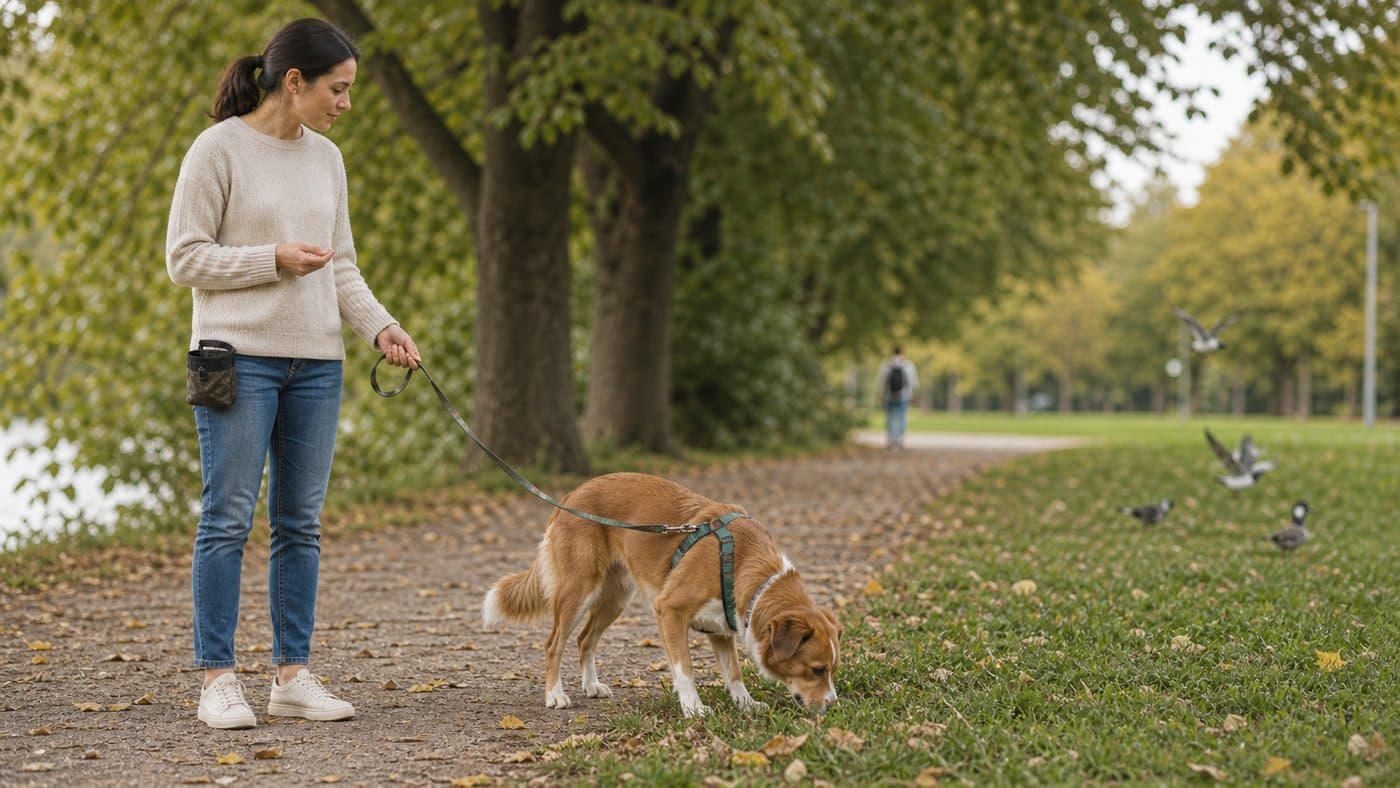
A dog who listens inside but not outside is not being dishonest. Outside is a different classroom. Smells, dogs, people, traffic, wildlife, and open space compete with your cues.
Find the first place the cue breaks
Which cues fail outside? Is your dog distracted, scared, pulling, sniffing, or over threshold? Can they eat? Can they respond in the driveway but not at the park?
Training should move in steps: kitchen, porch, driveway, quiet street, busier street, park edge, then harder environments.
Stop turning the cue into background noise
Do not repeat the cue louder and louder. That teaches the cue is background noise. Do not punish a dog who is too overwhelmed to respond.
Make the first outdoor version easier
Make cues easier outside. Use better rewards, shorter sessions, and lower-distraction locations. Reward attention before asking for hard behaviors. Let sniffing be a reward when safe.
If your dog cannot respond because of fear or reactivity, work on distance and emotional regulation before obedience.
Why outside changes everything
Your dog is not being stubborn simply because the cue worked in the kitchen and failed on the sidewalk. Outside contains moving smells, sounds, dogs, people, traffic, wildlife, food scraps, and a larger sense of possibility. The cue may be the same, but the learning environment is completely different.
Dogs also learn by context. "Sit" in the living room may not automatically mean "sit while a skateboard passes." Recall in the yard may not mean recall away from another dog. That is normal training, not a character flaw.
Check the emotional state first
Before repeating a cue, ask whether your dog can think. Can they take food? Can they look back at you? Are they sniffing in a relaxed way, or scanning with a tight mouth and high body? A dog who is frightened, overexcited, or frustrated may not have enough bandwidth for obedience.
If the dog is over threshold, make the environment easier. Move farther away, use a quieter street, pause behind a car, or let them sniff for a moment before asking for anything.
Build an outside training ladder
Make a list of locations from easiest to hardest. For many dogs it looks like this: living room, backyard, front porch, driveway, quiet sidewalk, neighborhood corner, park edge, busy trail. Practice the same cue in each place before expecting it in the next one.
Use better rewards outdoors. Dry kibble may be enough inside, but outside may require chicken, cheese, a favorite toy, or permission to sniff. Rewarding with access to the environment is especially useful: eye contact, then "go sniff."
Keep sessions short. Five good responses in an easy spot build more skill than twenty ignored cues in a hard spot.
Protect the cue
Say the cue once. If your dog cannot do it, help them with an easier version instead of repeating the word until it becomes background noise. Move closer, lower criteria, or change the environment.
If outdoor listening suddenly worsens, consider pain, adolescence, stress, heat, or fear. Training works best when the dog is physically comfortable and emotionally able to learn.
A simple weekly goal
Pick one cue and one outdoor location for the week. For example, practice name response on the driveway for three minutes a day. When your dog can respond easily, move one step harder. Small, repeatable wins create stronger outdoor behavior than testing every cue in every exciting place.
Reward attention before asking for obedience
Many owners wait until the dog is already distracted, then ask for a cue. Flip the timing. Reward your dog for checking in before you need anything. If they glance at you on the driveway, pay it. If they turn toward you after sniffing, pay it. If they notice a person and can still look back, pay it.
This builds the habit you need outside: the dog learns that the environment does not erase you. Once attention is easier, sit, down, recall, heel, and leave-it all have a better chance.
Use sniffing instead of fighting it
Sniffing is not always disobedience. It can be information gathering, decompression, or a reward. If you treat every sniff as a problem, walks become a constant argument. Instead, use sniffing strategically.
Ask for a small cue your dog can do, reward with food, then release with "go sniff." This makes the environment part of the reinforcement system. Your dog learns that listening can lead back to the thing they wanted.
When outdoor failure is emotional
If your dog cannot listen because they are worried about dogs, people, traffic, or sounds, obedience practice alone will not fix it. You need distance, easier routes, and emotional safety. A dog who is scanning, panting, pulling hard, refusing food, or freezing is not in the same learning state as a relaxed dog who simply smells something interesting.
Match the plan to the cause. Distraction needs practice. Fear needs space and confidence. Frustration needs easier setups and reinforcement for calm choices.
Make the first minute easy
The first minute outside sets the tone. Many dogs burst through the door already too excited to listen. Pause before leaving, reward a check-in at the doorway, and step outside only when the leash is not tight. Once outside, reward the first offered glance toward you before asking for anything harder.
If your dog immediately pulls, scans, or loses interest in food, begin in an easier place. The front porch or driveway can be a full training location. You do not have to reach the park for the session to count.