
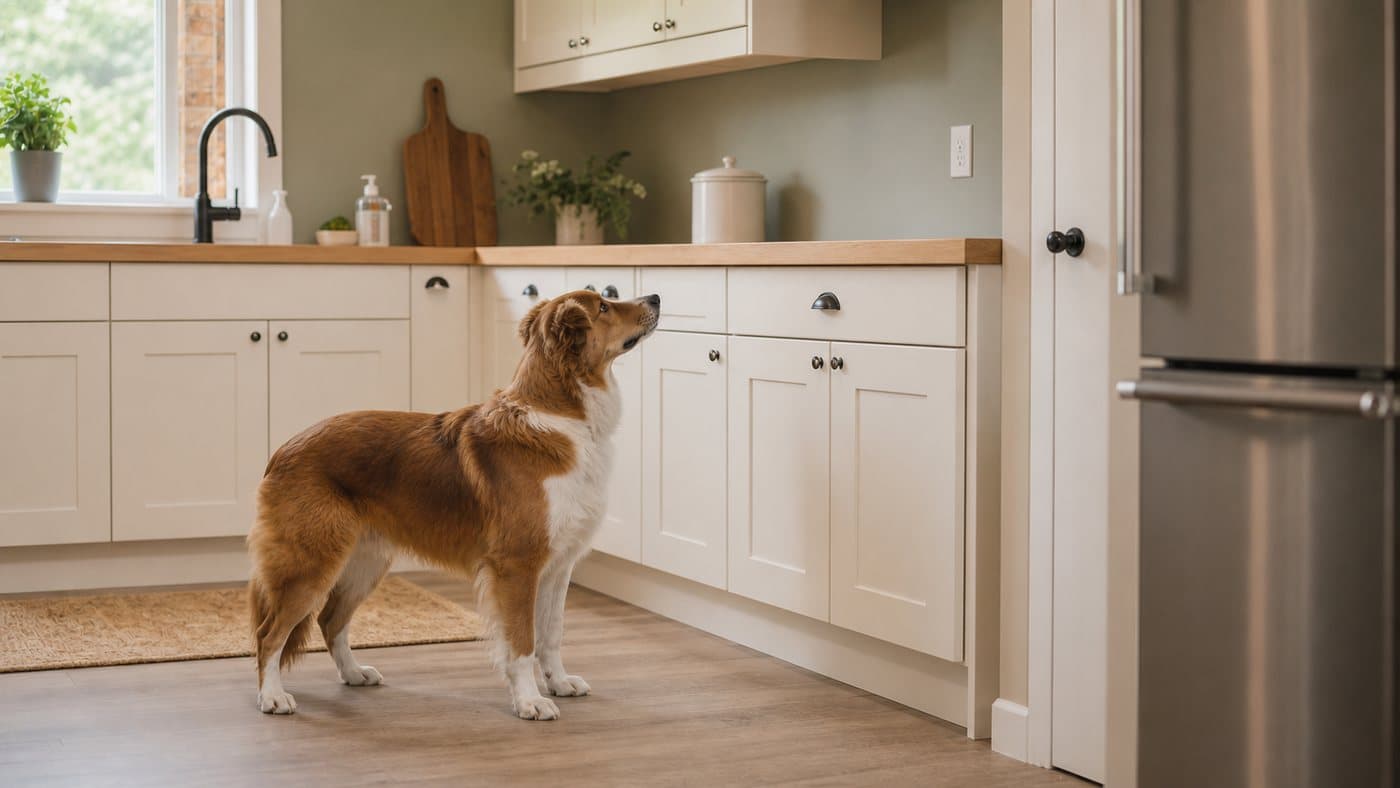
Counter surfing works because food sometimes appears. If your dog finds bread, chicken, butter, or wrappers even once in a while, the counter becomes worth checking. This is especially true when no one is watching.
Find when the counter pays
Does it happen after cooking, when you leave the room, or when the dog is under-exercised? Is your dog hungry, bored, anxious, or simply practiced at scavenging?
Do not scold after the counter already paid
Do not rely on punishment after the fact. The dog learns you are scary near the counter, not that counters are always irrelevant. Avoid booby traps that can create fear.
Make the counter boring before training
Make counters consistently boring. Put food away, use gates, close the kitchen, and manage trash. Teach a station outside the kitchen while you cook. Reward the dog for lying on a mat or staying behind a gate.
For dogs who counter surf from anxiety when alone, check video and address the absence distress too.
Why counter surfing becomes reliable
Counter surfing is not mysterious from the dog's point of view. The counter sometimes pays. One chicken bone, sandwich crust, butter wrapper, or pan with grease can teach a dog to check again for weeks. The reward does not have to happen every day. Occasional success can make the habit stronger.
The behavior also often happens when humans are distracted. A dog learns that counters are safer to investigate when people leave the room, load the dishwasher, answer the door, or sit down to eat.
This is why scolding after the fact does not work well. By the time you find the missing food, the dog has already been paid by the counter.
Separate scavenging from anxiety
Most counter surfing is normal scavenging plus rehearsal, but context matters. If your dog also paces, whines, scratches doors, barks, or destroys items only when alone, the counter may be part of a broader stress pattern. Video can help you see whether the dog is calmly searching or frantically moving through the house.
Also consider hunger, medication changes, diet changes, and medical issues if the behavior appears suddenly or food-seeking becomes extreme.
Make the kitchen boring
For two weeks, aim for zero successful counter rewards. Put food away before you sit down. Move bread, fruit, and dirty pans out of reach. Use a lidded trash can. Block the kitchen when you cannot supervise.
At the same time, teach an alternative that pays better when you are present. A mat outside the kitchen works well. Reward your dog for settling there while you prep food. Start with short, easy moments before trying a full dinner.
When you leave the room, manage the environment instead of testing willpower. Good management is not cheating. It is how habits fade.
If the dog already stole something
Do not chase unless the item is dangerous. Chasing can turn stealing into a game. For unsafe items, use a cheerful trade with high-value food and then improve prevention. If your dog guards stolen items, growls, or snaps, use a safety plan and get help from a qualified behavior professional.
The useful checkpoint
If the plan is working, you should see fewer rehearsals, not a dog who "knows better" while tempting food is still available. Keep a simple counter log for two weeks: what was left out, where the dog was, and whether access was blocked. The boring days are the successful ones.
Teach kitchen boundaries before dinner chaos
Do not wait until you are handling hot pans and dropped food to train. Practice when the kitchen is boring. Send your dog to a mat, feed a treat, release, and repeat. Then add small distractions: opening a cabinet, touching the counter, placing a bowl down, or chopping a vegetable.
Build duration slowly. A dog who can stay on a mat for ten seconds while nothing happens is not ready for a full holiday meal. Reward often enough that the mat remains worth choosing.
Alone-time prevention
If counter surfing happens when you leave the house, close the kitchen or remove access before departure. Do not use your absence as the test. Dogs do what works when no one is there, and a single success can restart the habit.
For some dogs, counter surfing during absences is part of stress movement. If video shows pacing, barking, door focus, or inability to settle, address the alone-time issue as well. A calmer absence plan may reduce the searching.
Dangerous foods and objects
Counter surfing is not only annoying. Dogs may eat cooked bones, chocolate, grapes, onions, medications, wrappers, knives with food residue, or hot pans. If your dog stole something unsafe, contact a veterinarian or poison control resource promptly. Prevention is a safety plan, not just a manners plan.
The counter is losing value when
Progress looks boring. The kitchen is blocked when you leave. Food is not available. The dog chooses a mat while you cook. There are fewer chances to rehearse the old habit. Do not expect your dog to stare at a sandwich on the counter and make a moral choice.
After several weeks of prevention and mat rewards, many dogs check counters less often because the search stops paying. The key is consistency. One forgotten roast can restart the game.
Treat management as training support, not failure. The fewer rewards the counter gives, the easier your alternative behavior becomes.
Start with the next meal, not next month.