
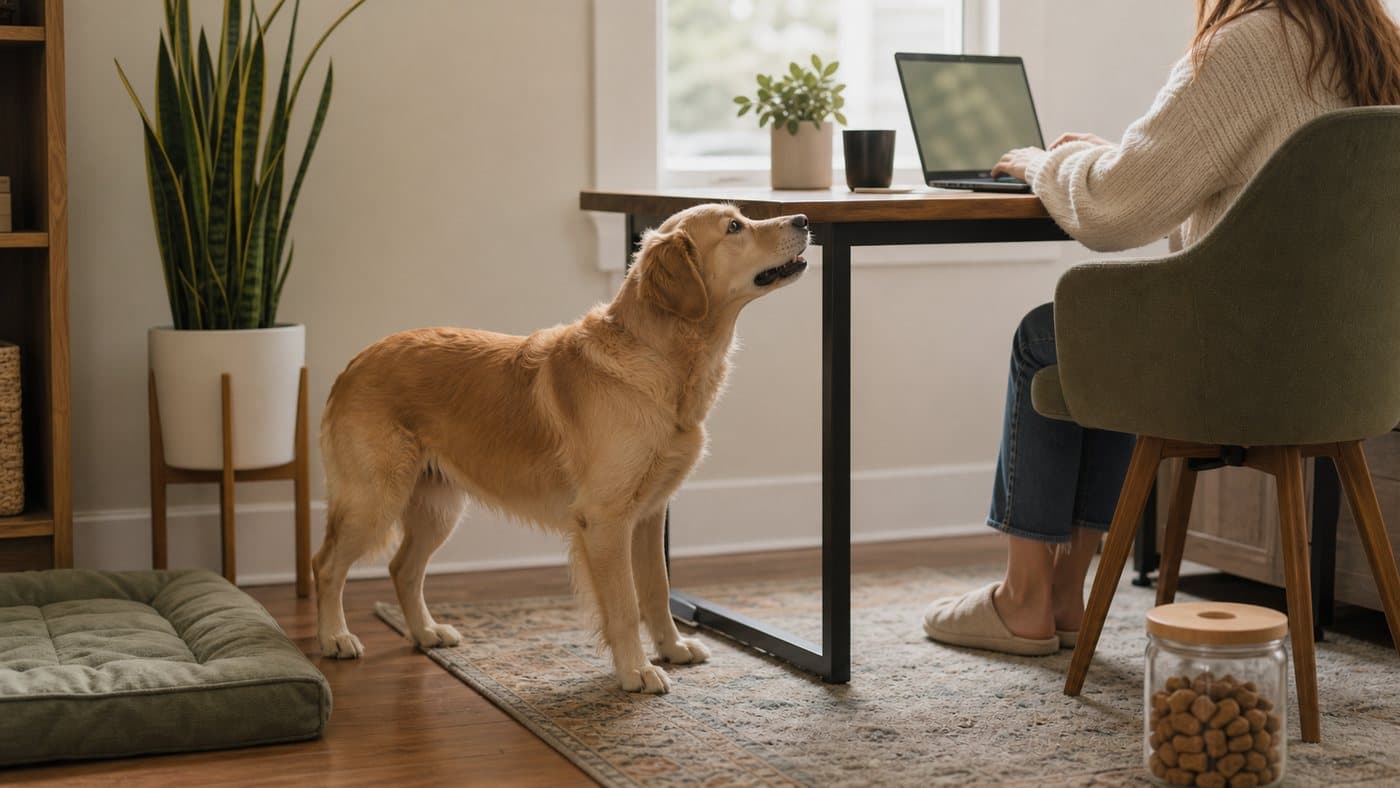
Demand barking usually means barking has become a way to make people move, look, talk, feed, open doors, play, or give attention. It is not a character flaw. It is a behavior that sometimes works.
Find what the bark buys
What does your dog get after barking? Eye contact, scolding, food, throwing a toy, going outside, or a person standing up? Even annoyed attention can reinforce the pattern.
Check needs before treating it as demand
Before deciding the bark is only about attention, check bathroom needs, exercise, pain, hunger, and anxiety. Then teach the replacement before the bark starts.
Teach the request you want
Choose a replacement: chin rest, mat settle, bringing a toy, or quiet eye contact. Reward it generously during times your dog usually barks.
If barking starts, pause briefly and avoid big reactions. The moment your dog offers the replacement or quiet reset, reward that. Consistency across all family members matters.
Identify the exact request
"Attention barking" is a useful starting label, but it is still too broad for a training plan. Your dog may be asking for play, food, the door to open, help reaching a toy, reassurance, or a predictable evening routine. Write down what happens before the barking and what happens after it.
Time of day often gives clues. Barking at 5 p.m. may be tied to dinner history. Barking when you sit at a laptop may be about lost access to interaction. Barking after a busy day may come from overtiredness rather than a deliberate attempt to be difficult.
Also check whether the barking is truly demand-based. A dog who barks while pacing, scanning, or unable to settle may be anxious or overstimulated, not simply asking for attention.
Pay quiet behavior before the bark
The cleanest plan is to notice the behavior you want before barking starts. If your dog lies down while you cook, drop a treat. If they bring a toy instead of barking, play briefly. If they look at you quietly near the door, ask for a simple cue and then go outside.
This teaches the dog which behaviors work. Without that step, ignoring barking can leave the dog frustrated and confused.
Use a predictable cue for unavailable times. For example, give a chew on a mat before you start a meeting. Practice "all done" by ending play, scattering a few treats, and guiding your dog to a rest activity.
When the old bark still appears
Stay boring. Turn slightly away, breathe, and wait for a tiny pause or a replacement behavior. Then reward the quiet reset with something appropriate. If your dog needed the bathroom, take them out calmly. If they wanted play, ask for a sit or toy retrieve before starting.
If barking becomes frantic, lasts for long periods, appears suddenly, or comes with signs of pain or confusion, look beyond training. Health, stress, under-stimulation, and anxiety can all increase vocal behavior. A good plan meets needs and teaches alternatives.
Measure progress fairly
Demand barking often gets louder for a short period when the old pattern stops working. That does not mean the plan is wrong, but it does mean everyone must be consistent and the replacement must be easy. Track how quickly your dog can reset. Shorter barking, faster quiet, and more offered mat behavior are real progress.
Needs are not the same as demands
Before changing the barking plan, check basic needs. A dog who has not been outside, is hungry, is under-exercised, is in pain, or is anxious may bark because something is wrong. Training should not become a way to ignore real needs.
Once needs are met, look at patterns. If the dog barks every time you open a laptop and then gets a toy thrown, the barking is probably working. If the dog barks while pacing, panting, or staring at the door, you may be seeing stress or frustration instead.
Make a family rule
Demand barking gets confusing when one person ignores it, another scolds it, and another gives food to stop the noise. Choose one household plan. For example: reward quiet mat behavior before dinner, ignore the first bark if needs are met, then reward a quiet sit or chin rest.
Write the replacement behavior on the fridge if you need to. The dog does not need a perfect family, but they do need enough consistency to understand what works.
A sample evening routine
If barking happens in the evening, try a planned routine before the noisy window. Bathroom break, short sniff walk, dinner, five minutes of easy training, then a chew or mat settle before people sit down. Reward quiet check-ins during the first few minutes of the routine.
The point is not to keep the dog busy forever. The point is to prevent the predictable barking loop and pay the calmer behavior before the dog has to shout for attention.
Pay the reset, not the peak
If you decide the dog needs something, wait for the smallest possible pause or ask for an easy replacement before delivering it. This does not mean ignoring a dog who needs to go outside. It means avoiding the pattern where barking at full volume is the exact behavior that opens the door, starts the game, or makes dinner appear. Pay the reset, not the peak.
Over time, your dog learns that quiet behavior is the faster route. That is the real training goal.