
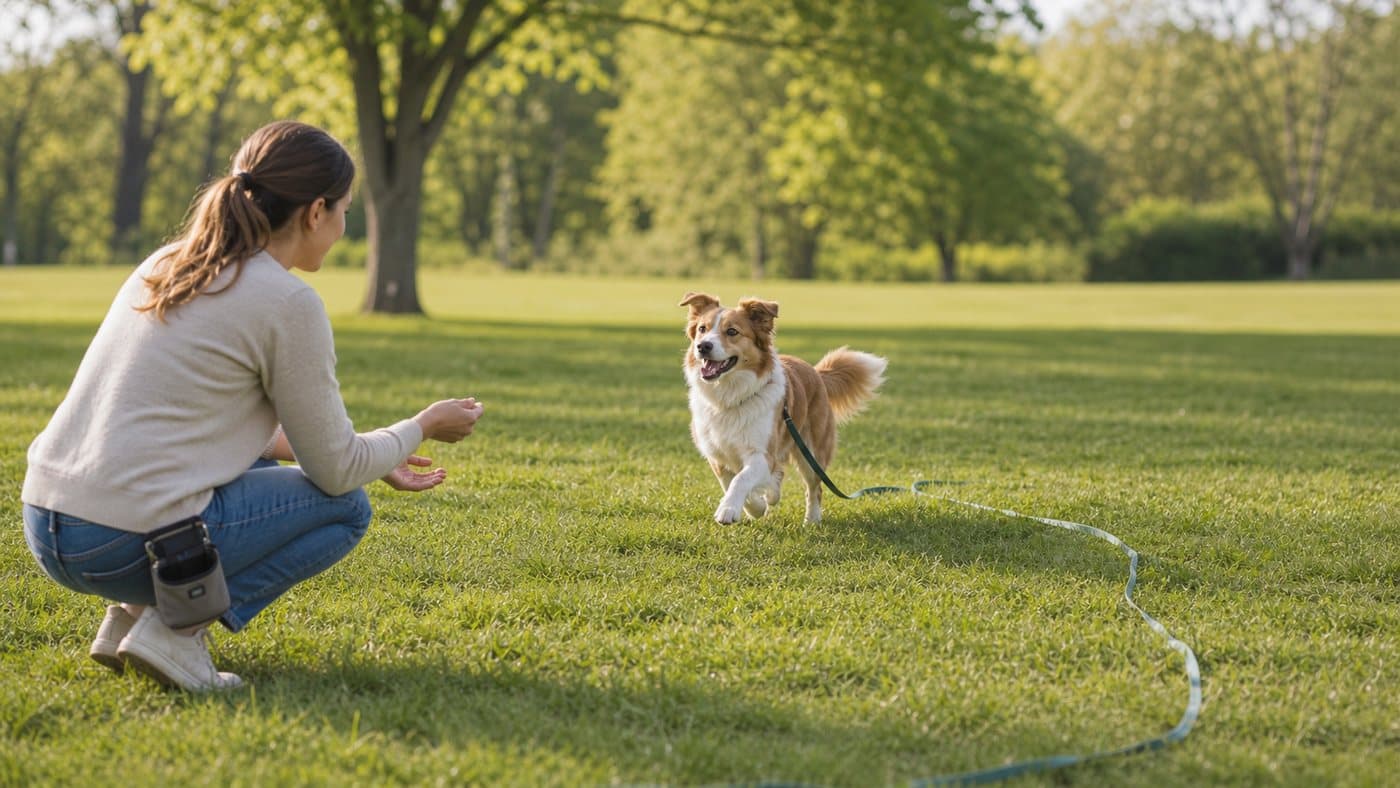
Recall is not just a word. It is a history. If coming when called predicts the end of fun, a bath, a scolding, or being grabbed, many dogs learn to hesitate.
Find what your recall currently predicts
Does your dog come indoors but not outside? Do they come until another dog appears? Do you call repeatedly without reward? Do you call only when you are about to take something away?
Do not punish the return
Do not punish your dog after they finally come. That teaches coming back is risky. Do not use recall in places where failure is likely until you have built the skill.
Rebuild before the hard situations
Rebuild the cue with high-value rewards. Call once in easy settings, reward, and release your dog back to fun when safe. Practice on a long line outside. Make coming back predict good things, not the end of everything.
If your dog runs away because of fear, noise, or reactivity, address the underlying trigger as well as the recall.
Why recall breaks down
Coming when called is not one behavior. It is a choice to leave something interesting and return to a person. That choice is harder around smells, other dogs, wildlife, visitors, food, open space, and fear triggers.
Many recall problems are built accidentally. The dog hears their name ten times with no reward. They are called only when fun ends, when the leash goes on, when they are about to be put in a crate, or when a person is angry. Over time, coming back predicts loss.
Rebuild the cue value
Choose a recall word you can protect. Practice indoors first. Say it once in a cheerful voice, move away, reward with excellent food, and then release the dog back to what they were doing. That release is important. It teaches that coming back does not always end fun.
Move to a fenced yard or quiet outdoor area on a long line. Call when the dog is likely to succeed, not when they are already chasing something. If they cannot respond, shorten distance and lower distractions.
Use management while training
Until recall is reliable, avoid off-leash freedom in unsafe areas. A long line gives practice without gambling. It also prevents the dog from learning that ignoring the cue leads to better adventures.
Do not chase your dog unless safety requires it. Chasing often turns recall into a game. Instead, move away, crouch sideways, clap softly, or scatter treats when the dog orients toward you.
Add real-life rewards
Food is useful, but life rewards make recall stronger. Come, get a treat, then go sniff. Come, touch hand, then greet a familiar person if appropriate. Come, clip leash, treat, then continue the walk.
If recall failure is tied to fear, do not treat it as disobedience. A dog fleeing fireworks, traffic, or another dog needs safety, distance, and trigger work in addition to recall practice.
Make a recall savings account
Think of every easy recall as a deposit. Call your dog when they are already coming, reward, and release. Do this many more times than you call them away from something hard. When the cue has a long history of paying well, it is more likely to work when you truly need it.
Stop poisoning the cue
A recall cue gets "poisoned" when it predicts things the dog dislikes. If "come" usually means nail trims, leaving the park, being scolded, or having a toy taken away, the dog is not being mysterious. They are using their history.
For two weeks, protect the cue. Do not use it when you are angry. Do not use it if you know the dog will ignore you. Walk calmly to the dog, use a leash, trade for food, or change the setup instead. Meanwhile, rebuild the cue in easy situations with rewards the dog actually values.
A simple practice plan
Practice five tiny recalls a day. One in the kitchen, one from the hallway, one from the yard on a long line, one during a quiet walk, and one when your dog is already looking at you. Reward each one well. Then release the dog back to sniffing, playing, or resting when safe.
Keep the session short. Recall training fails when people save it only for the hardest moment. You want the dog to think coming back is a normal, profitable habit, not an emergency interruption.
Build an emergency recall separately
For real safety situations, create a special cue you rarely use. Pair it with exceptional food several times when the dog is already close. Say the cue, feed a jackpot, and end. Do not use this cue casually at the dog park or when you are annoyed.
An emergency recall is still not magic. It needs management, long-line practice, and safe environments. But a carefully protected cue can help when a gate opens, wildlife appears, or your dog turns toward a risky road.
Recall is gaining value when
Progress is not only your dog coming from the hardest distraction. Early progress is faster head turns, shorter hesitation, coming from mild smells, and returning even when they know they will be released again. Track those small wins. If your dog comes indoors but not outside, you do not have a bad dog. You have a cue that needs more outdoor history, better rewards, and safer practice levels.
Keep the cue cheerful and rare enough to matter. If you are saying it all day with no payoff, it becomes background noise.