
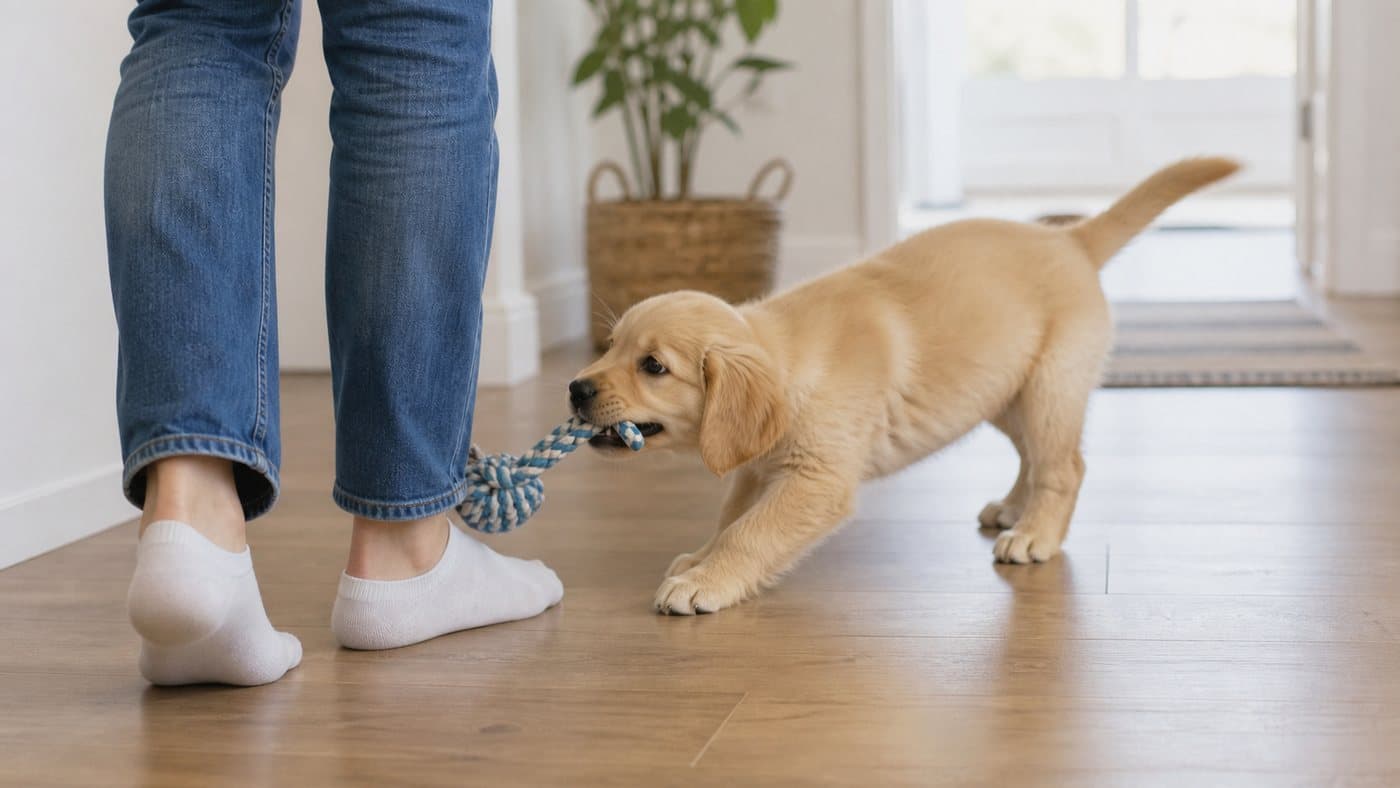
Ankles are exciting to puppies. They move fast, make fabric flap, and create a chase game. Many puppies bite ankles more when they are tired, overstimulated, or under-exercised in the wrong way.
Find the bite window
Does ankle biting happen during evening chaos, after play, when children run, or when you walk away? Is the puppy loose and playful, or stiff and defensive? Can they switch to a toy?
If the puppy bites harder when overtired, the answer may be sleep, not more play.
Do not make feet more exciting
Do not kick, yell, or turn ankle biting into a wrestling match. Pushing the puppy away can become part of the game. Avoid chasing the puppy after they grab pants.
Redirect before feet become the game
Carry a tug toy when moving through puppy zones. Redirect before teeth hit skin. If the puppy is already attached to clothing, freeze briefly, offer a toy or scatter food, then change the setup.
Add planned naps. Many ankle biting episodes improve when the puppy gets more sleep and fewer chances to rehearse chasing feet.
If biting is deep, defensive, or directed at children, get help from a qualified force-free trainer.
Why ankles are so tempting
Ankles move fast, make fabric flutter, and are right at puppy height. For herding breeds and high-energy puppies, moving feet can trigger chase. For overtired puppies, ankles become the nearest moving outlet for a brain that needs sleep.
The timing tells you a lot. If ankle biting happens during transitions, after evening play, while children run, or after a long stretch awake, arousal and fatigue are likely. If it happens when the puppy is cornered, picked up, or handled, it may be defensive rather than playful.
Set up the room for success
Use baby gates, pens, and leashes to manage movement during the worst times of day. Keep tug toys in the places where ankle biting happens: hallways, kitchen, backyard door, and near the couch. The goal is to redirect before the puppy grabs clothing.
If children are involved, slow the environment down. Running and squealing often make ankle biting worse. Adult supervision should include preventing chase games before the puppy is over threshold.
Teach a better chase outlet
Give the puppy legal movement games. Toss a toy away from your feet, drag a tug toy low on the ground, or scatter a few pieces of food so the puppy sniffs instead of bites. Reward the puppy for following you with four paws on the floor.
Practice short walking patterns indoors. Take two steps, feed at your side, take two more, feed again. End before the puppy becomes frantic.
Use naps as training support
Many ankle biting problems improve when the puppy sleeps more. Puppies often need far more rest than owners expect. If your puppy gets wilder instead of calmer after play, choose a bathroom break, chew, and nap setup rather than more exercise.
If biting breaks skin hard, comes with growling and stiff body language, or targets children repeatedly, get help promptly. Puppy biting is common, but safety still matters.
Signs feet are becoming less exciting
Expect shorter episodes first, not instant perfection. A puppy may still think feet are exciting, but they should redirect faster, bite clothing less often, and settle sooner after naps improve. If the behavior gets more intense despite rest and redirection, the puppy may need an easier environment or professional coaching.
Clothing and movement matter
Loose pants, robe ties, slippers, and fast steps can make ankle biting more tempting. During the worst phase, wear less flappy clothing around the puppy and move calmly through tight spaces. This is not a permanent lifestyle change; it is a way to lower rehearsal while the puppy learns.
If ankle biting happens when you walk away, toss a treat or toy away from your feet before you move. The puppy learns to orient to the floor or toy instead of chasing your legs.
Plan for predictable trouble times
Most puppies have predictable bite windows: early morning, after dinner, after visitors, or before naps. Prepare before those windows. Put a tug toy in your pocket, set up a gate, take the puppy out to potty, and have a nap space ready.
Once the puppy is already attached to your pants, training is harder. Good puppy plans happen a few minutes earlier than the biting.
If children are the target
Children move quickly and sound exciting, so ankle biting around kids needs extra management. Use gates, leashes held by adults, or separate play zones. Teach children to freeze and call an adult rather than running, squealing, or pushing the puppy away. If bites are hard or children are frightened, work with a qualified force-free trainer.
Practice calm walking as a game
When the puppy is rested, practice walking past them with food in your hand. Take one slow step, feed before they bite, then pause. Build to two steps, then three. Keep sessions short enough that the puppy succeeds.
This teaches that moving feet predict food on the floor or at your side, not a chase game. It is much easier to teach when the puppy is calm than during the evening bite storm.
Repeat this in different rooms before expecting it near children, guests, or outdoor excitement.
If the puppy can succeed when rested, the plan is working. If they only fail when tired, schedule the nap earlier.