
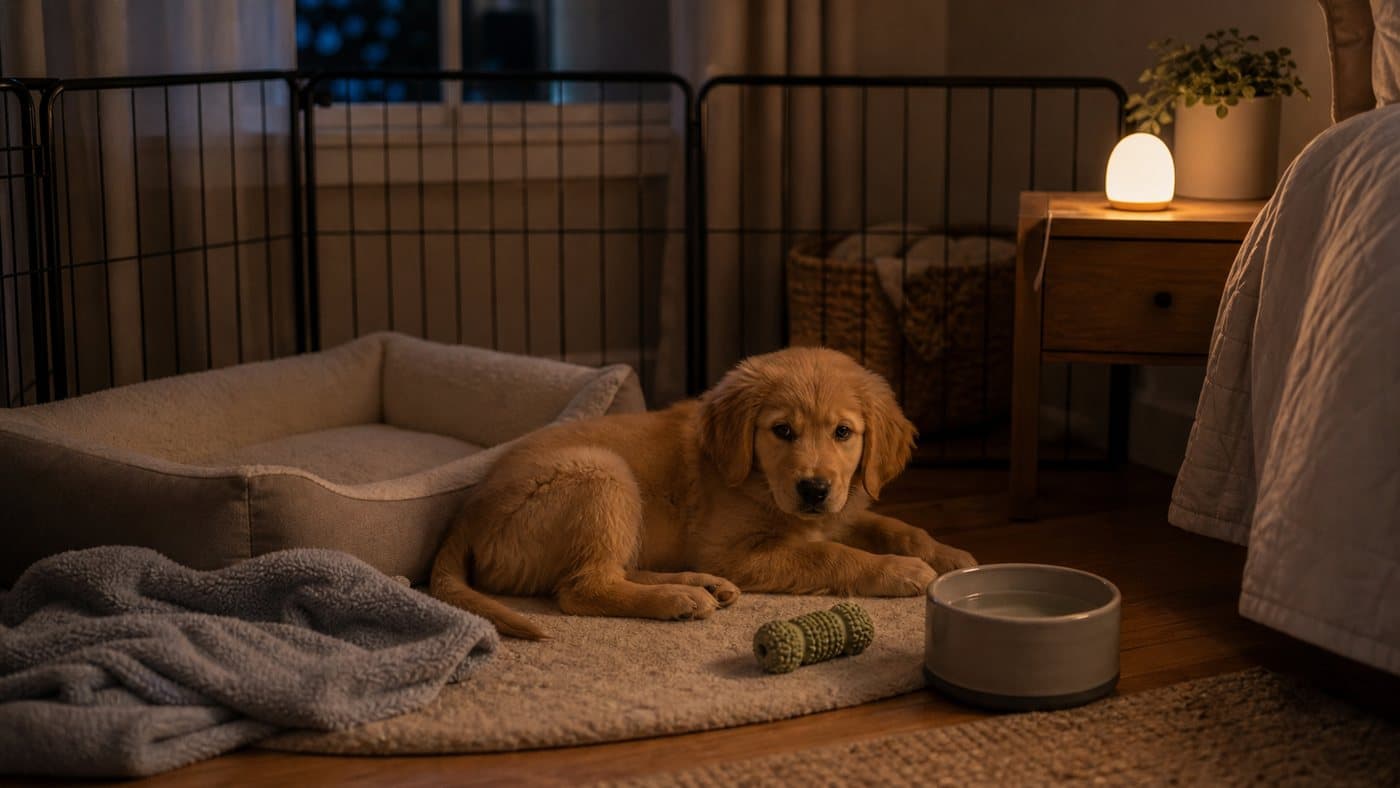
A puppy who will not settle at night is not always under-exercised. Many are overtired. When puppies miss sleep, they can bite, bark, pace, and look more energetic than they really are.
Separate bathroom need, overtiredness, and panic
Track the evening routine. Is there wild play right before bed? Does the puppy need a bathroom break? Do they settle better near you than in a distant room? Are they panicking in the crate or protesting briefly?
The difference matters. Brief whining that fades is different from escalating panic, drooling, scratching, or frantic attempts to escape.
Start the wind-down before bedtime
Create a predictable wind-down. Quiet bathroom break, dimmer room, chew or lick mat, then sleep area. Avoid rough play in the last hour. Put the crate or pen close enough that the puppy does not feel abandoned.
Reward calm moments during the day, not only at bedtime. Puppies learn settling as a skill.
When night restlessness needs help
If your puppy cannot sleep, cries intensely, has diarrhea, vomits, coughs, or seems painful, call your veterinarian. If crate panic continues, rebuild crate comfort in tiny steps.
Night settling is a skill
Puppies do not arrive knowing how to power down in a human home. The evening may include play, meals, visitors, children, television, new sounds, and a sudden move to a crate or pen. For a young puppy, that is a lot to process.
A puppy who will not settle may be overtired rather than under-exercised. More play can make the body wilder while the brain gets less able to cope. Watch for frantic biting, zooming, barking, glassy eyes, and inability to take food gently. Those signs often mean it is time to reduce stimulation.
Build a predictable evening rhythm
Use the same simple sequence most nights: dinner, calm potty break, quiet chew or lick activity, dim lights, final potty break, then sleep area. Keep voices soft and avoid chase games in the last hour.
Put the sleep area close enough that the puppy does not feel abandoned. Many puppies do better with the crate or pen in the bedroom at first, then gradually moved if needed. Proximity can build security; it does not ruin independence.
Respond without creating a party
If the puppy wakes and whines, first consider bathroom needs. Take them out quietly, give a chance to potty, then return to bed without play. If the puppy is clean, safe, and only briefly fussing, pause and listen. If distress escalates, adjust the setup rather than forcing panic.
Reward calm daytime settling too. Place treats between the puppy's paws when they lie down quietly. Practice short crate or pen rests during the day when you are nearby.
When night trouble is not normal
Call your veterinarian for persistent diarrhea, vomiting, coughing, repeated urination, pain, or sudden inability to sleep. Get force-free training help if crate distress includes frantic escape attempts, drooling, or panic that does not improve with easier steps. Normal puppy adjustment should become easier with routine, not more intense each night.
Keep the daytime honest
Night problems often begin earlier in the day. Track wake windows, naps, meals, potty trips, and intense play. A puppy who spends the day overstimulated may fall apart at bedtime. A puppy who sleeps all evening may be wide awake at midnight. Adjusting the day often solves more than changing the crate at night.
Overtired looks like extra energy
One of the hardest puppy truths is that tired puppies often look wild, not sleepy. They bite harder, run faster, bark more, and seem unable to stop. Owners then add more play, which can push the puppy further past the point where settling is possible.
If your puppy has been awake for a long stretch and suddenly becomes frantic, try a sleep-support plan instead of more exercise. Take a quiet potty break, offer a chew or lick activity, dim the room, and reduce interaction. Stay close enough to help the puppy feel safe, but avoid turning bedtime into a game.
Crate protest or crate panic?
Brief protest may sound like a few minutes of complaining, then settling. Panic looks different: escalating cries, frantic scratching, drooling, biting bars, repeated attempts to escape, or inability to settle even when exhausted. Panic should not be ignored or forced.
If the crate is too hard, make the setup easier. Move it closer, use a pen, keep the door open during practice, or rebuild crate comfort during daytime. A puppy who feels trapped at night will not learn to love the crate by being left to panic.
A practical bedtime checklist
Before bed, ask five questions: Has the puppy pottied? Have they eaten normally? Have they had calm contact, not only wild play? Is the sleep area comfortable and close enough? Was the last hour quiet enough for the puppy's brain to slow down?
If the answer to one of those is no, fix that before assuming the puppy is stubborn. Night settling improves when the whole evening supports rest.
What not to change all at once
When nights are rough, it is tempting to change everything: new crate spot, new food, new bedtime, more exercise, less attention, different bedding. That makes it harder to know what helped. Change one or two things at a time and keep notes for several nights.
Start with the least risky changes: calmer evening routine, final potty break, crate closer to you, and more daytime naps. If those help, you have useful direction. If the puppy still escalates, look more closely at crate comfort, health, and whether the puppy is being asked to sleep too far away too soon.