
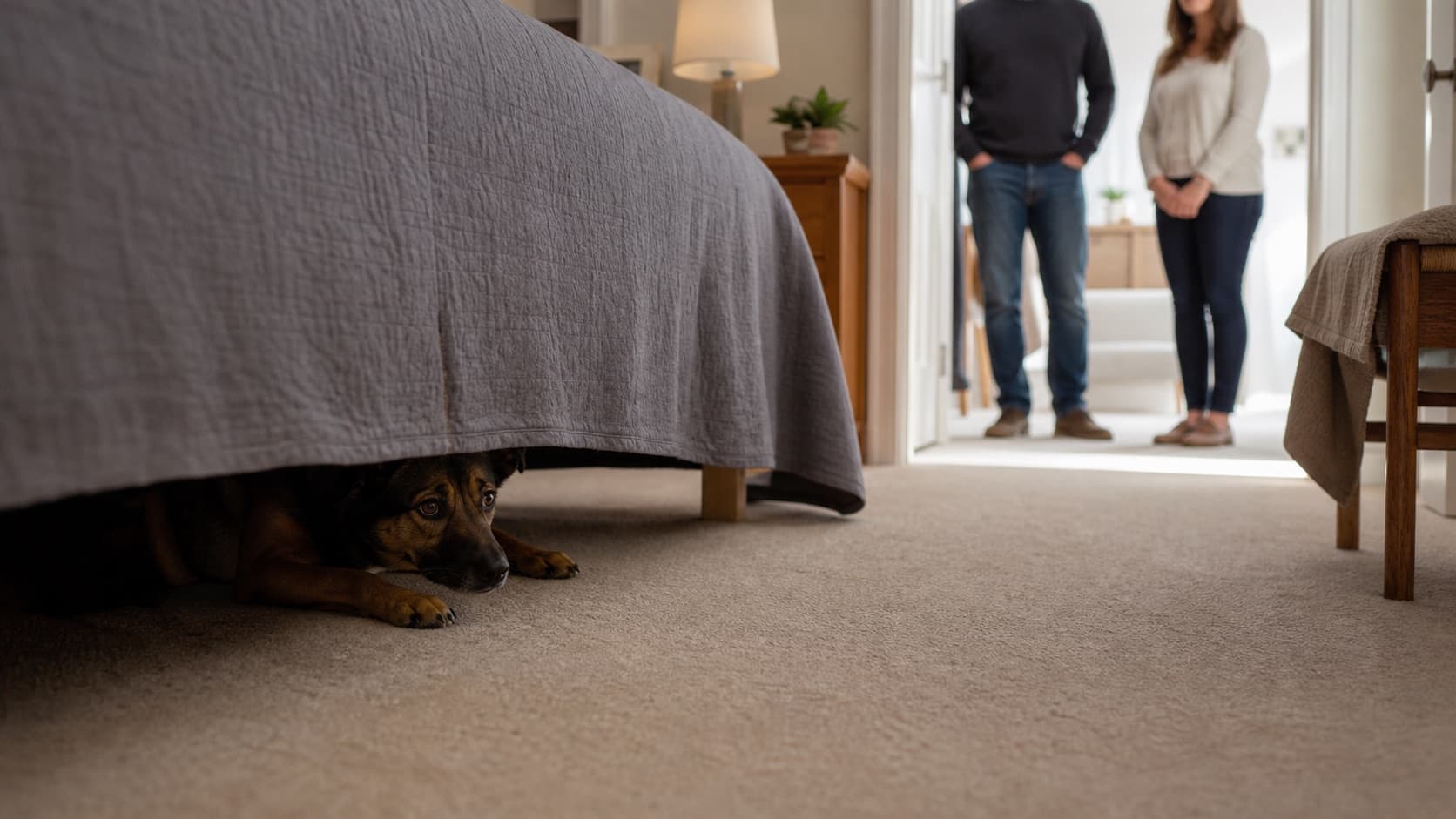
When guests arrive, some dogs rush to the door. Others disappear under the bed. They may stay there for ten minutes, the whole visit, or even after everyone leaves. Owners often wonder whether the dog is shy, stubborn, poorly socialized, or being dramatic.
Hiding is useful information. Your dog has found a place where pressure drops. Under the bed, nobody is reaching, leaning, staring, or walking directly toward them. The space may feel safer because it has a roof, walls, and distance.
The goal is not to drag the dog out. The goal is to understand what part of the guest experience feels too hard and give the dog safer choices.
Why guests can feel overwhelming
Guests change the home. The doorbell rings, people enter, voices get louder, bags move, shoes squeak, and familiar routines disappear. Even friendly visitors can be intense because they look at the dog, reach down, use excited voices, or crowd the entryway.
Some dogs are worried about specific types of guests: tall people, children, men, people wearing hats, people carrying items, or people who move quickly. Others are not afraid of a person type; they are afraid of the whole arrival scene.
For newly adopted dogs, senior dogs, puppies in sensitive periods, or dogs with limited social history, the home may not yet feel secure enough to handle visitors.
What hiding says in body language
Hiding usually means the dog wants distance. Watch what happens before they disappear.
Early signs may include lip licking, yawning, turning the head away, lowering the body, moving behind you, freezing, refusing food, or sniffing the ground without relaxing. Some dogs bark first and then hide. Others silently leave.
If a dog hides and then growls when someone reaches under the bed, the growl is not the main problem. The reach removed the dog's last safe option.
Do not turn hiding into a forced greeting
Do not assume the dog needs to "face their fear." Forcing greetings can teach the dog that people are even less safe.
Do not assume a hiding dog is fine because they are quiet. Quiet can mean coping, not comfort.
Do not let guests crawl toward the dog, reach under the bed, lure the dog close and then pet them, or block the exit. Those choices can turn hiding into growling, snapping, or long-term fear.
Find the moment hiding starts
Write down what happens during guest visits. Does your dog hide at the doorbell, when the door opens, when guests look at them, when children move, or when people sit down?
Notice whether your dog comes out when guests ignore them. Can they take tossed treats? Do they approach with a loose body and then retreat? Do they stay hidden even after quiet guests sit down?
Also notice recovery. A dog who comes out after five calm minutes is having a different experience than a dog who hides for hours, refuses food, or trembles.
Give the dog a protected guest zone
Give your dog a guest plan before anyone arrives. Set up a safe room, crate with an open door, gated area, or covered bed where guests will not bother them. Add water, a comfortable bed, and a chew if your dog can eat during mild stress.
Tell guests the rule before they enter: no reaching, staring, calling, leaning over, or following the dog. Ignoring a nervous dog is often kinder than trying to win them over.
If your dog chooses to watch from a distance, have guests toss treats away from their body, not lure the dog close. Tossing away lets the dog collect food and retreat. That builds choice.
Make arrivals quieter
The entryway is often the hardest part. Doorbell, voices, coats, and movement happen all at once. Move your dog behind a gate or into a safe room before opening the door. Let guests settle before your dog has a chance to look.
For some dogs, the best first goal is simply hearing a guest enter while staying relaxed in another room. That is still progress.
If your dog later comes out, keep the visit low pressure. Guests should stay seated sideways, avoid direct eye contact, and let the dog control distance.
When hiding needs more support
Get help if hiding is paired with growling, snapping, biting, panic, trembling, house soiling, or refusal to recover after visits. Also talk with a veterinarian if hiding appears suddenly, especially with pain signs, appetite changes, confusion, or irritability.
A qualified behavior professional can help create a visitor plan that protects the dog, guests, and household routines.
A better first goal than greeting
Many owners want the dog to greet guests. A better first goal is comfort at a distance. If your dog can hear guests, stay in their safe space, eat a chew, and recover after the visit, you are building trust.
Greeting can come later, if the dog chooses it. Some dogs will become social with careful practice. Others may always prefer distance with visitors. That is acceptable if the plan keeps everyone safe and the dog has real choice.
Signs guest visits are getting easier
Progress may look small: the dog stays on a bed instead of diving under furniture, takes tossed treats, peeks from the hallway, or comes out after guests sit quietly. Those are meaningful changes.
Do not rush from "peeked out" to "guest pets the dog." Let each step become easy before adding more pressure.
The bed is not the enemy. It is information. Your dog is showing you where they feel safe. Use that information to build a guest routine that starts with distance, choice, and calm behavior.